The ADX Trend Filter combines the Average Directional Index, directional movement lines, and fast/slow EMAs. ADX describes directional-movement strength; it does not indicate direction by itself. A threshold such as 20 is a test condition, not proof that a trend is real or that noise has disappeared.
What is agentic AI for finance and accounting? It is a workflow where a model plans steps, calls available tools, and assembles an output for review. Actual capability depends on which tools, data, and permissions are present. Retrieving financial statements does not make the system an accounting ledger, tax engine, or autonomous trading platform.
Pineify Finance Agent supports market research through connected financial-data tools and conversational analysis. This article separates that current workflow from possible accounting applications that would require additional integrations and controls.
Which AI stocks trade under $1? This article does not publish a live ticker list. A name belongs on an "under $1" watchlist only when quote, currency, and timestamp support that label, and issuer filings support its AI business exposure. The workflow here builds a dated research list rather than an undated bargain roundup.
UT Bot Alerts is a TradingView indicator that marks changes around an ATR-based trailing level. Its settings control signal behavior; they do not supply a universal win rate. This guide identifies the original publication, explains how to evaluate sensitivity, and separates a chart signal from an executable trading strategy.
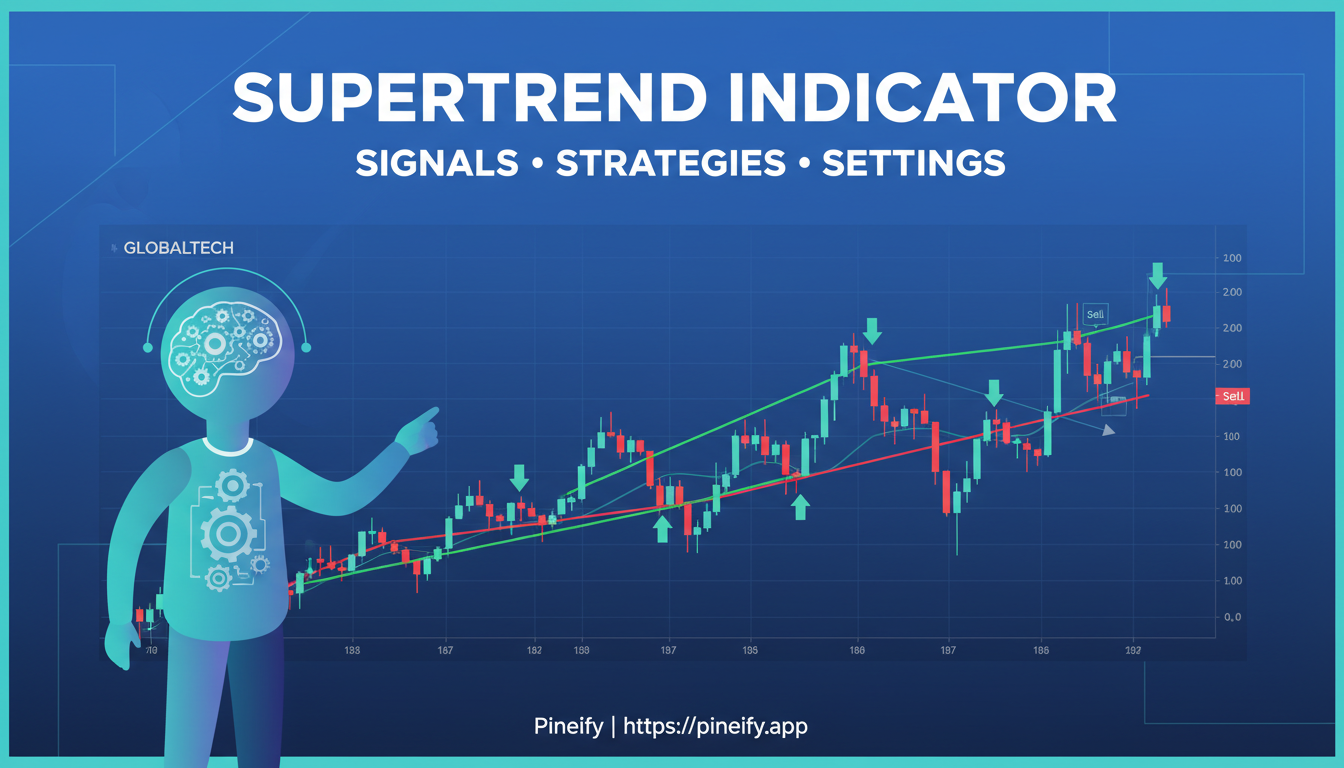
Supertrend is an ATR-based trend indicator. Its line alternates between an upper and lower trailing band as its direction changes. Those changes describe a price condition; they do not establish a profitable entry rule or a universally best setting.
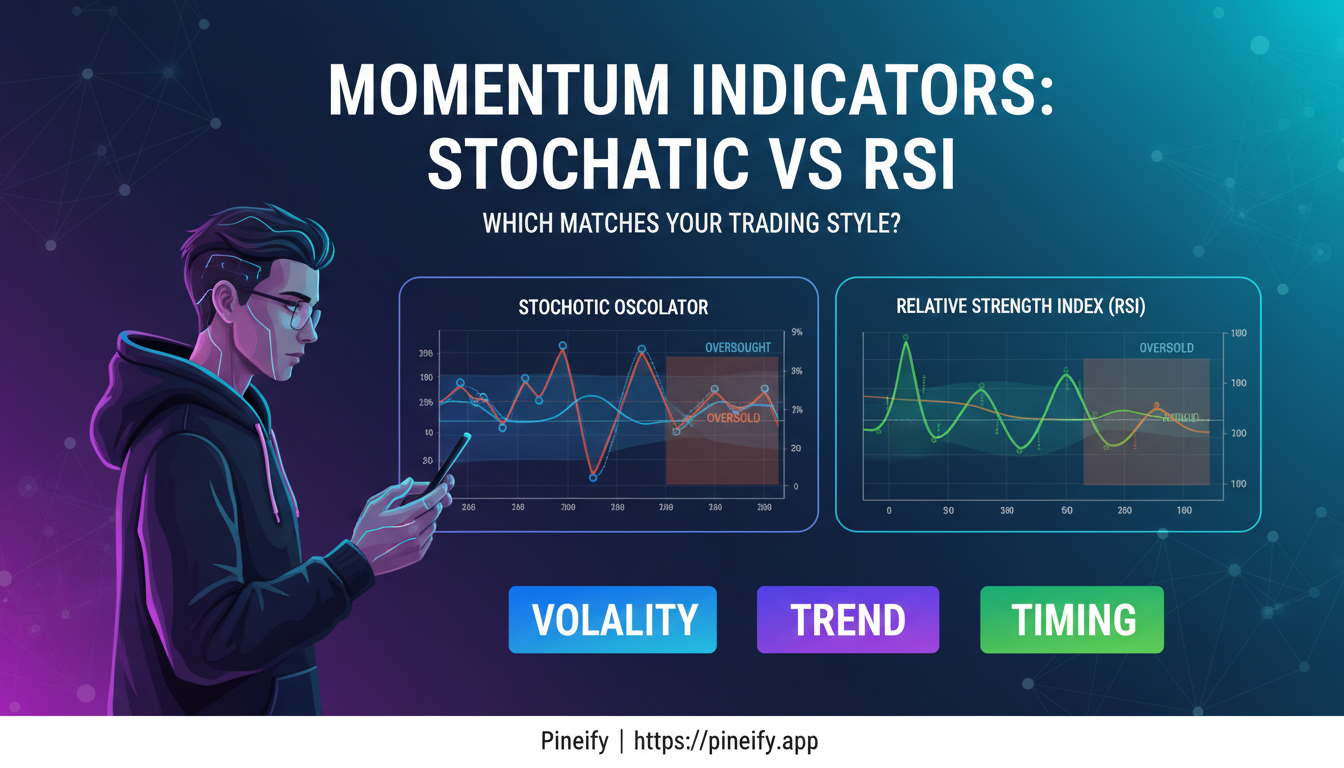
RSI and the Stochastic Oscillator answer different questions about the same price history. RSI compares smoothed gains and losses. Stochastic measures the close's location within a recent high/low range, often with additional smoothing. Neither definition proves that one is best for trending markets, ranges, or day trading.
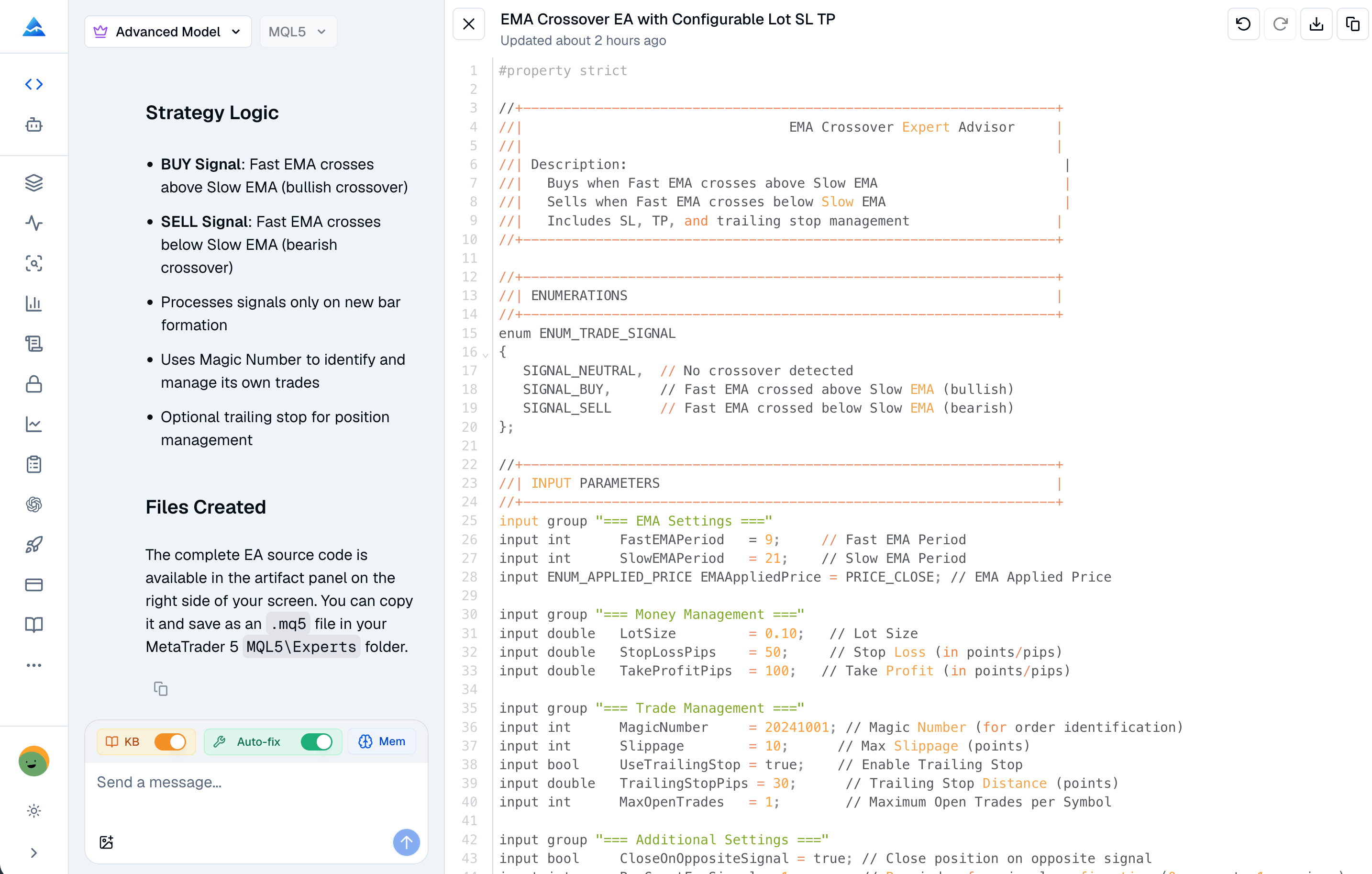
The best AI for an MQL5 project is the one whose output you can inspect, compile, and test against a precise trading specification. Pineify offers an MQL5 coding workflow, general assistants can draft MQL5, and MetaEditor has its own AI Assistant. No reproducible benchmark presented here establishes a first-compile success rate or an accuracy winner.
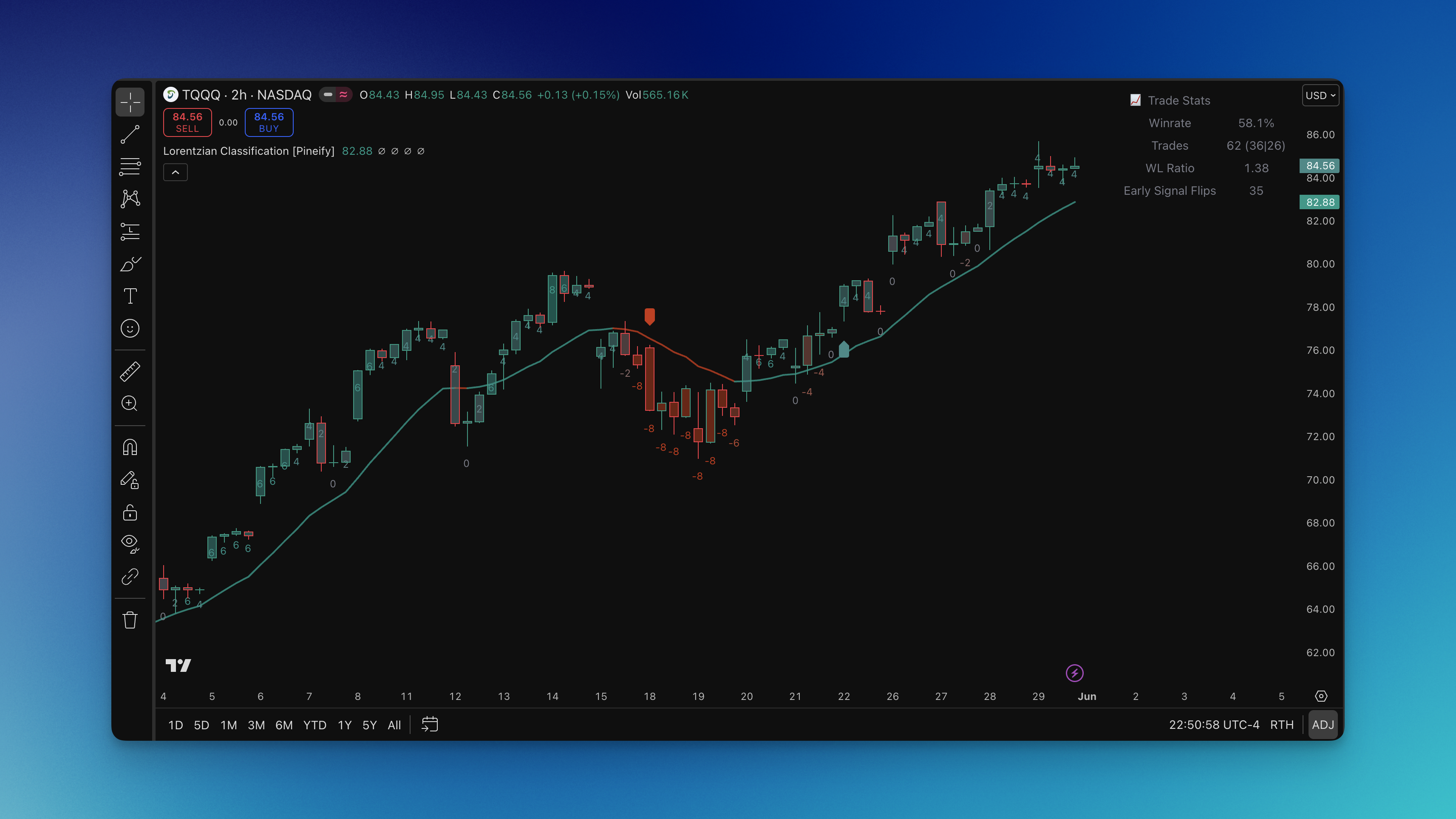
Lorentzian Classification combines technical features, a logarithmic distance calculation, stateful vote selection, filters, and kernel regression. Its “prediction” output is a model score, not a calibrated probability or an independently verified trading advantage. This guide describes the current Pineify component and the checks needed before interpreting its labels.
A squeeze indicator compares volatility envelopes and may display a separate momentum histogram. The squeeze state describes a relationship between those envelopes. It does not guarantee an explosive move, predict its direction, or establish that a longer squeeze will produce a larger return.
For MQL5, choose an AI tool by the development workflow it supports: editable source, access to the right API documentation, compiler feedback, and a way to inspect the resulting trades. A model name or a promise of "zero errors" cannot establish that an Expert Advisor implements your rules.
This is a Pineify-published comparison of documented capabilities. We have no reproducible head-to-head benchmark establishing a winning model, first-pass compilation rate, or fastest development time.