How to Use Pine Script SMA for More Accurate Trading Signals

What is SMA Crossover Indicator?
The Simple Moving Average (SMA) Crossover Indicator is a widely-used technical analysis tool that helps traders identify potential buy and sell signals based on the interaction of two moving averages. Typically, these moving averages are calculated over different time periods—one shorter and one longer.
When the shorter SMA crosses above the longer SMA, it generates a bullish signal, indicating a potential uptrend and a good time to buy. Conversely, when the shorter SMA crosses below the longer SMA, it produces a bearish signal, suggesting a downtrend and an opportunity to sell. This method smooths out price fluctuations, making it easier to spot trends and reversals in the market.
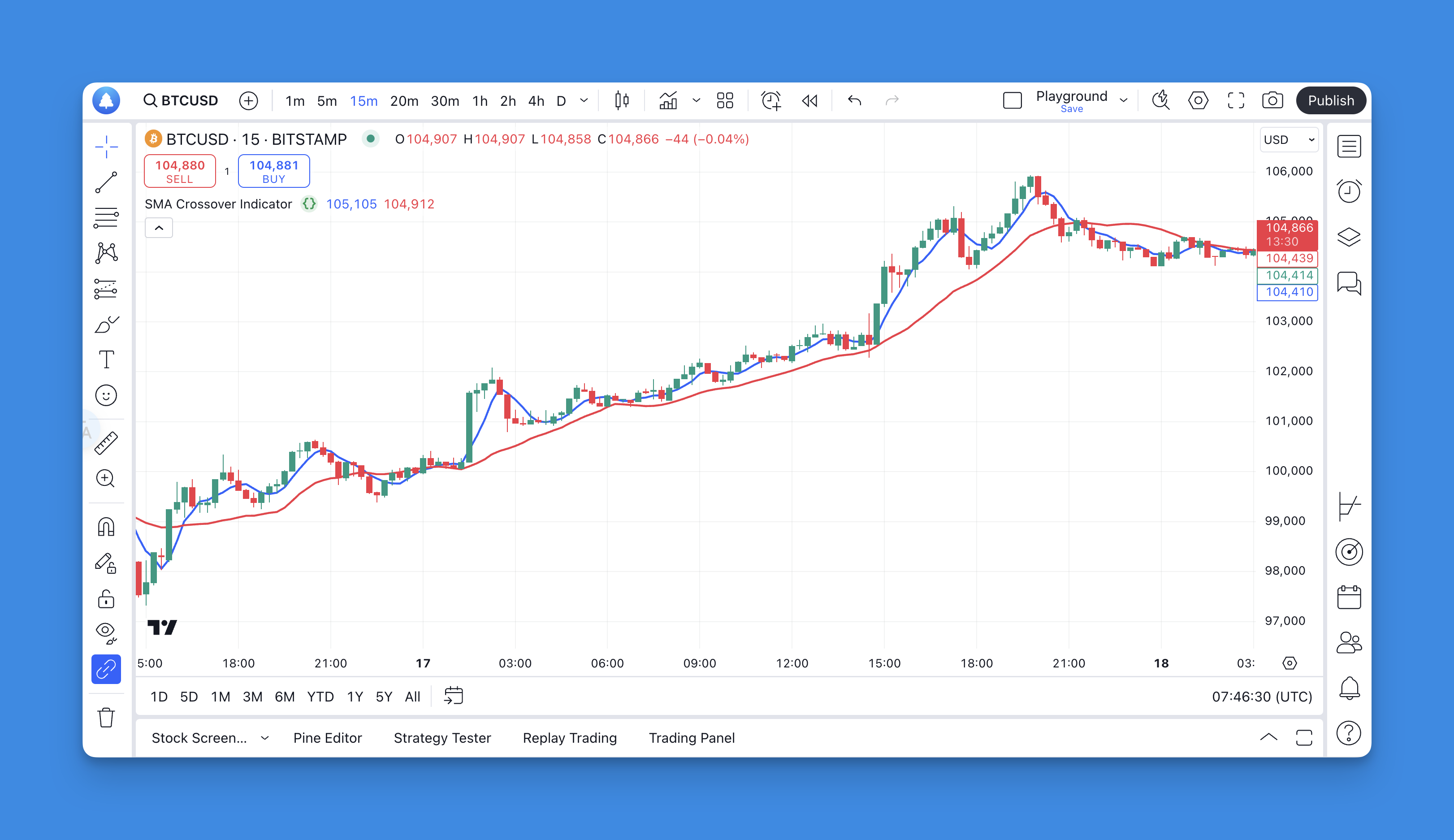
Key Benefits of SMA Crossover

- Trend Identification: Helps traders determine the direction of the market.
- Entry and Exit Signals: Provides clear buy or sell triggers.
- Ease of Use: Simple to calculate and interpret, making it accessible for beginners.
What is Pineify?

Pineify is an innovative no-code platform designed for traders who use TradingView. It allows users to create, customize, and manage trading indicators and strategies without requiring programming skills. With Pineify’s intuitive interface, traders can focus on their market analysis while automating complex tasks like indicator creation and backtesting.
Features of Pineify
- Unlimited Indicators: Add multiple indicators to your TradingView charts without restrictions.
- Customizable Inputs: Modify parameters like timeframe, length, and source with ease.
- Condition Editor: Combine various indicators to create precise trading rules.
- Backtesting Capabilities: Test your strategies against historical data for better decision-making.
- No Coding Required: Build complex strategies visually without writing Pine Script.
Pineify eliminates barriers for traders who lack coding expertise while enhancing their ability to develop robust trading strategies.
Add SMA Crossover Indicator Using Pineify
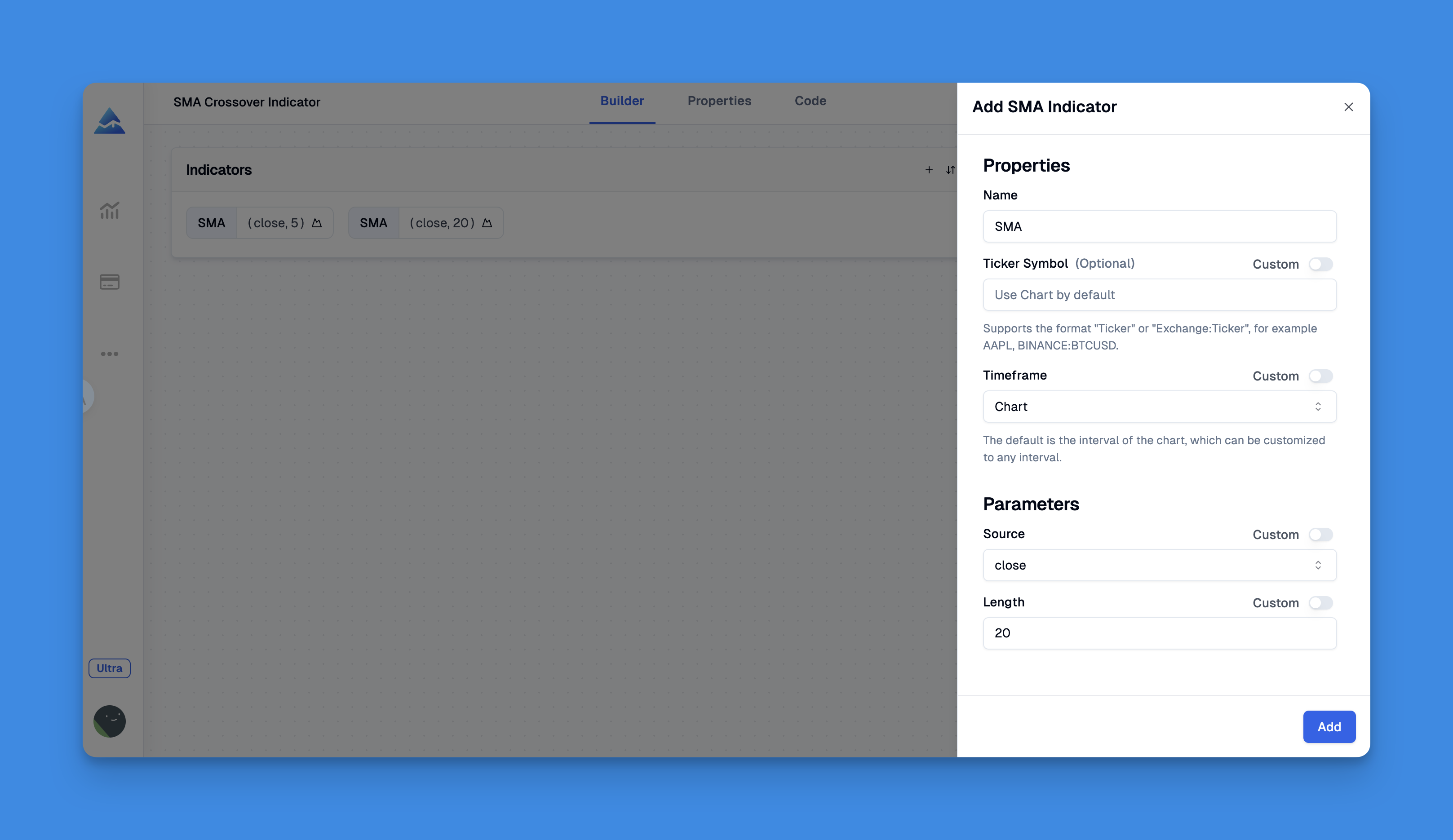
Adding an SMA Crossover Indicator in Pineify is straightforward. Follow these steps:
- Open Pineify’s Builder Tool:
- Navigate to Pineify's platform and access the indicator builder.
- Add Two SMAs:
- Use the "Add Indicator" icon to add two Simple Moving Averages (SMAs).
- Set one SMA as the shorter-term (e.g., 20-period) and the other as the longer-term (e.g., 50-period).
- Copy Code to TradingView:
- Once your indicator is configured, copy the generated Pine Script code from Pineify.
- Open TradingView’s Pine Script editor and paste your code.
- Save and add your new indicator to your chart.
Best SMA Crossover Indicator Settings
The effectiveness of an SMA crossover strategy depends on selecting appropriate settings based on your trading style:
- Short-Term Trading (Scalping):
- Use shorter periods like 5-period and 15-period SMAs for quick signals.
- Swing Trading:
- Opt for medium-term settings such as 20-period and 50-period SMAs.
- Long-Term Investing:
- Choose longer periods like 50-period and 200-period SMAs for broader trend analysis.
Tips for Optimizing Settings
- Combine with other indicators like RSI or MACD for confirmation.
- Adjust periods based on market volatility.
- Avoid using this strategy in sideways markets where false signals are frequent.
How to Use SMA Crossover Indicator in Trading
The SMA Crossover Indicator can be applied across various markets, including stocks, forex, and cryptocurrencies. Here’s how you can effectively use it:
Step-by-Step Guide
- Set Up Your Chart:
- Plot two SMAs with chosen periods (e.g., 20-period and 50-period).
- Identify Crossovers:
- Look for bullish crossovers (shorter SMA crossing above longer SMA) as buy signals.
- Watch for bearish crossovers (shorter SMA crossing below longer SMA) as sell signals.
- Confirm Signals:
- Use additional indicators like volume or support/resistance levels to validate crossovers.
- Execute Trades:
- Enter long positions after bullish crossovers.
- Exit or short positions after bearish crossovers.
- Set Risk Management Parameters:
- Place stop-loss orders below recent swing lows/highs.
- Define profit targets based on resistance levels or risk-reward ratios.
Example Strategy
- Combine a 50-day SMA with a 200-day SMA for a classic "Golden Cross" (bullish) or "Death Cross" (bearish) strategy.
- Use Pineify's backtesting feature to refine your approach before applying it live.
Conclusion
The Simple Moving Average Crossover Indicator is a powerful yet simple tool that helps traders identify trends, reversals, and optimal entry/exit points in the market. By integrating this indicator into your trading routine with platforms like Pineify, you can automate strategy creation and improve decision-making without coding expertise.
Whether you're a beginner or an experienced trader, mastering this indicator can significantly enhance your trading performance. Start experimenting with different settings today using tools like Pineify to unlock new opportunities in the financial markets.