Multi-timeframe candle analysis places higher-timeframe price information beside or over a lower-timeframe chart. On TradingView, you can use a built-in range overlay, a community candle script, or separate charts. The essential distinction is whether the higher-timeframe candle is still forming or has closed; treating an unfinished candle as final can change both signals and backtests.
Average True Range (ATR) measures recent price-range volatility, including gaps. It can supply a consistent unit for stop distances, position sizing, and volatility filters. It does not predict direction or guarantee that a stop will survive ordinary price fluctuations. An ATR strategy still needs explicit entry, exit, sizing, and execution rules.
A Donchian breakout strategy compares price with a range established by earlier bars. Its central implementation requirement is to exclude the signal bar from the breakout threshold. A close cannot exceed the highest high of a window that includes that same close's bar.
Ichimoku combines range midpoints and displaced plots to describe price structure. The cloud drawn ahead of price uses information already available; its forward position is not a forecast. A usable trading strategy must add explicit signal timing, exits and position sizing.
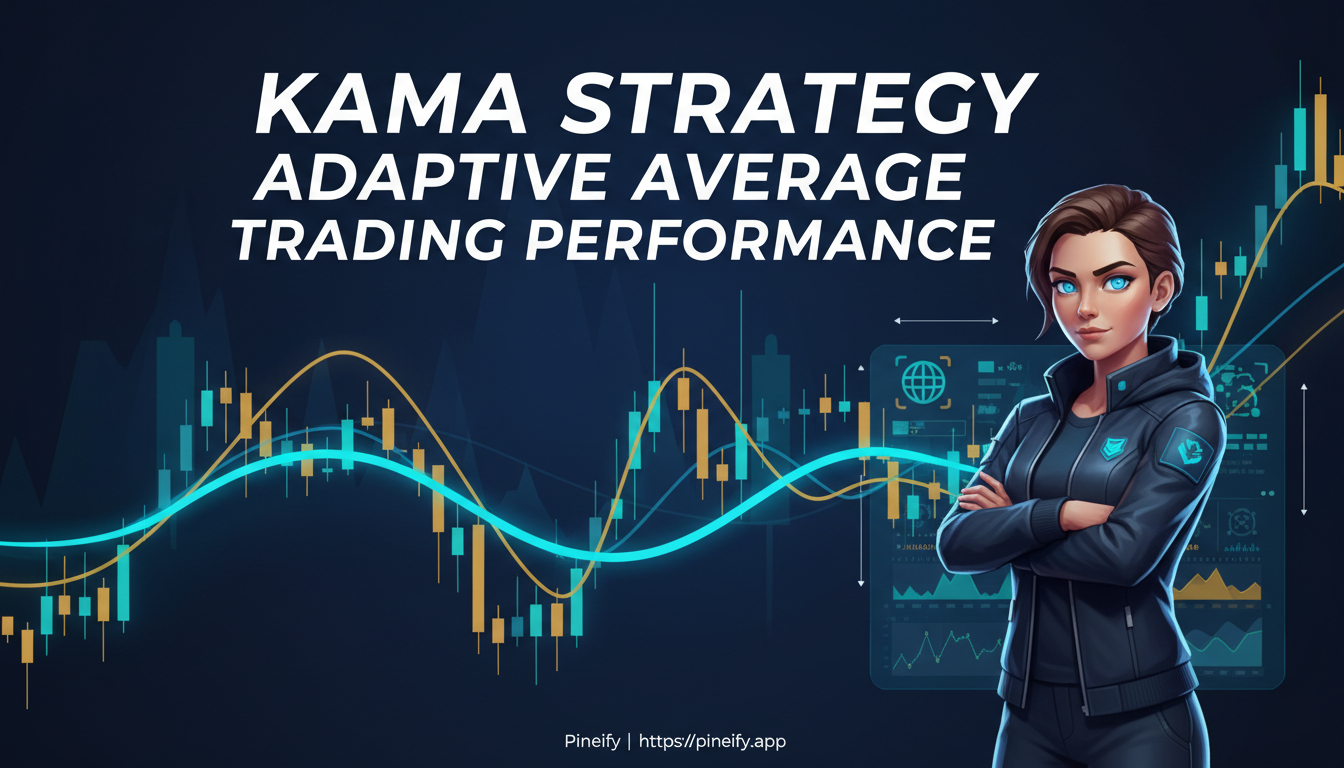
Kaufman's Adaptive Moving Average (KAMA) changes its smoothing weight with the efficiency of a price path. A steady move and a large back-and-forth move can have very different efficiency ratios even when both are volatile. KAMA therefore does not simply speed up whenever volatility rises.
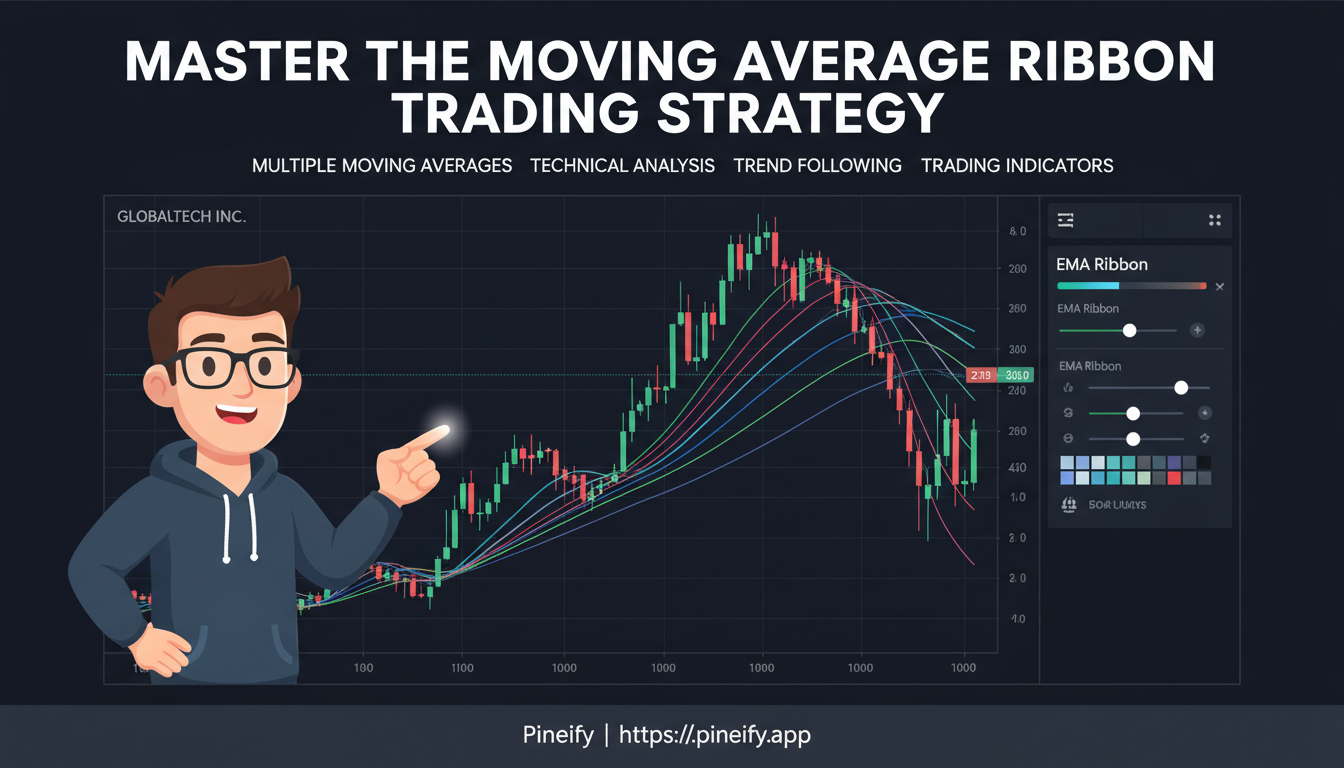
A moving average ribbon plots several lookback lengths on the same chart. It makes their ordering, slopes and separation visible. Different lengths on a five-minute chart remain five-minute calculations; they are not separate timeframes or independent evidence of a profitable trend.
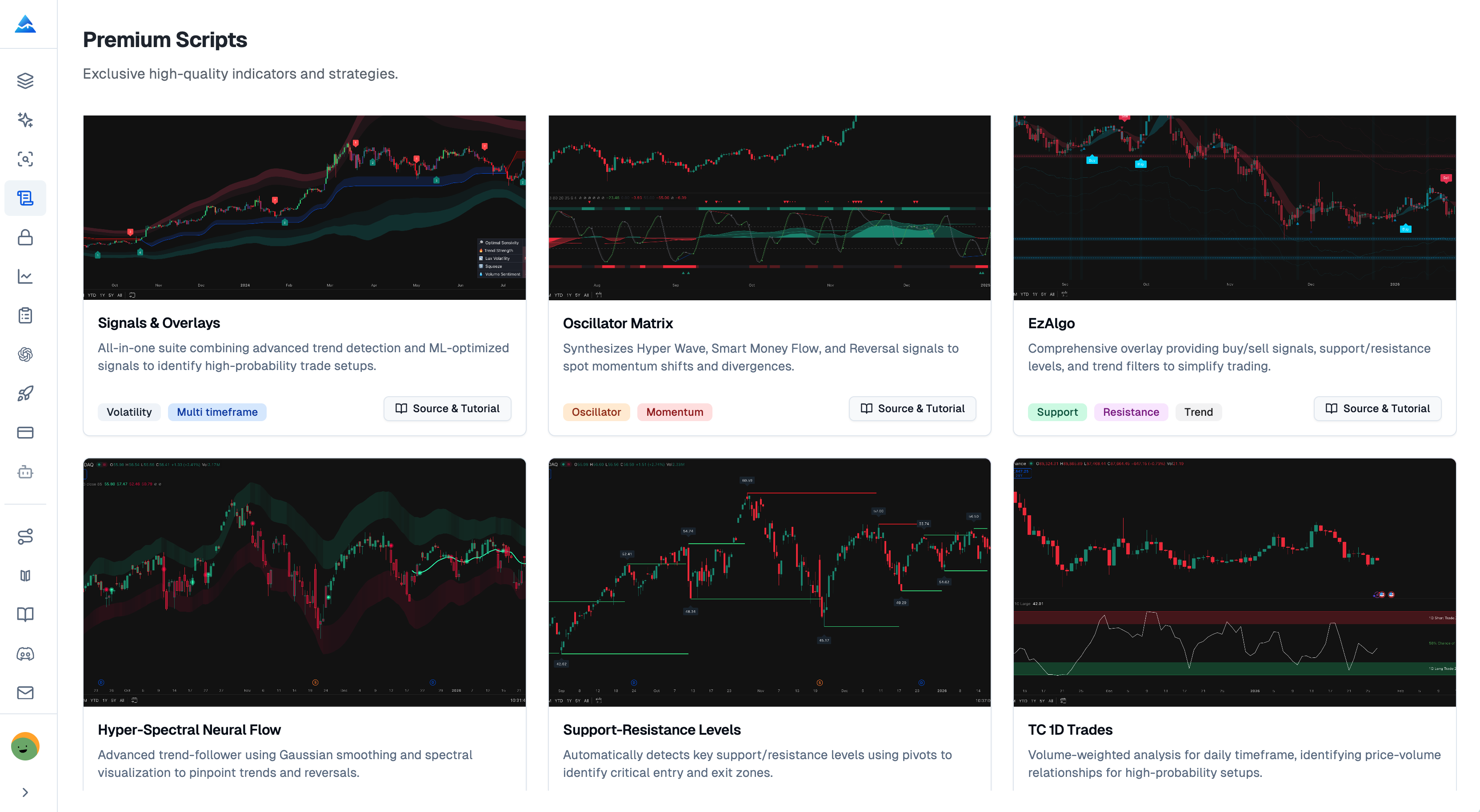
A paid Pine Script indicator is a licensed charting tool. Its price does not establish that its signals are accurate, its source is accessible or its historical display matches live behavior. Evaluate the access model, calculation timing, documentation and execution requirements before purchasing or relying on it.
array.push(id, value) appends one element to an existing Pine array and returns no value. The array's element type determines which values can be added. Use it when you need an explicit collection, such as a bounded history of selected events; ordinary Pine series already support historical references for many bar-by-bar calculations.
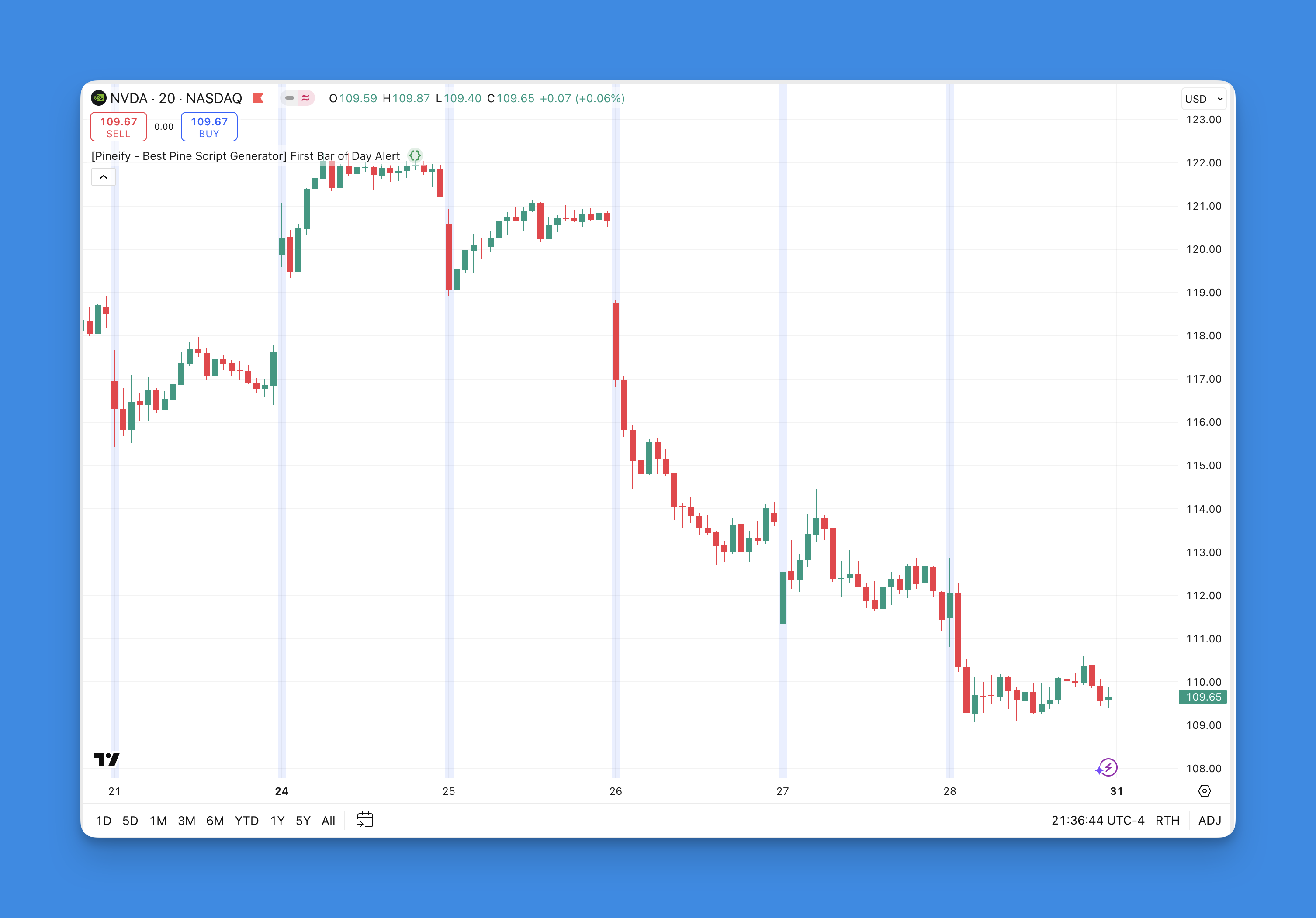
The first bar of a daily period, the first bar of a regular exchange session and the first bar inside a custom clock window are different events. Choose the event your trading rule needs before selecting a Pine time function. A daily-period change does not universally mean 09:30 in New York.
strategy.exit() creates price-based exit orders in a Pine strategy: stop loss, take profit, or a trailing stop. These are orders for TradingView's broker emulator, not an assurance of live execution at the requested price. A bracket can close all or part of the entry it references.