Is Boosted.ai or Pineify Finance Agent better for traders? Both support AI-assisted financial research, but the useful comparison is the workflow you need to complete, the evidence behind the answer, and the controls required to use it. A self-directed investor does not automatically need one product, and a professional team does not automatically qualify another without evaluation.
This guide is published by Pineify and is based on documented functions. It contains no hands-on speed benchmark, personal three-month trial, or verified return comparison.
A pivot high-low strategy uses detected local extremes as reference levels. Those extremes require later bars for confirmation, so a valid strategy must separate the turning-point time from the first time the level could be traded. The method differs from daily pivot formulas based on the previous session's high, low, and close.
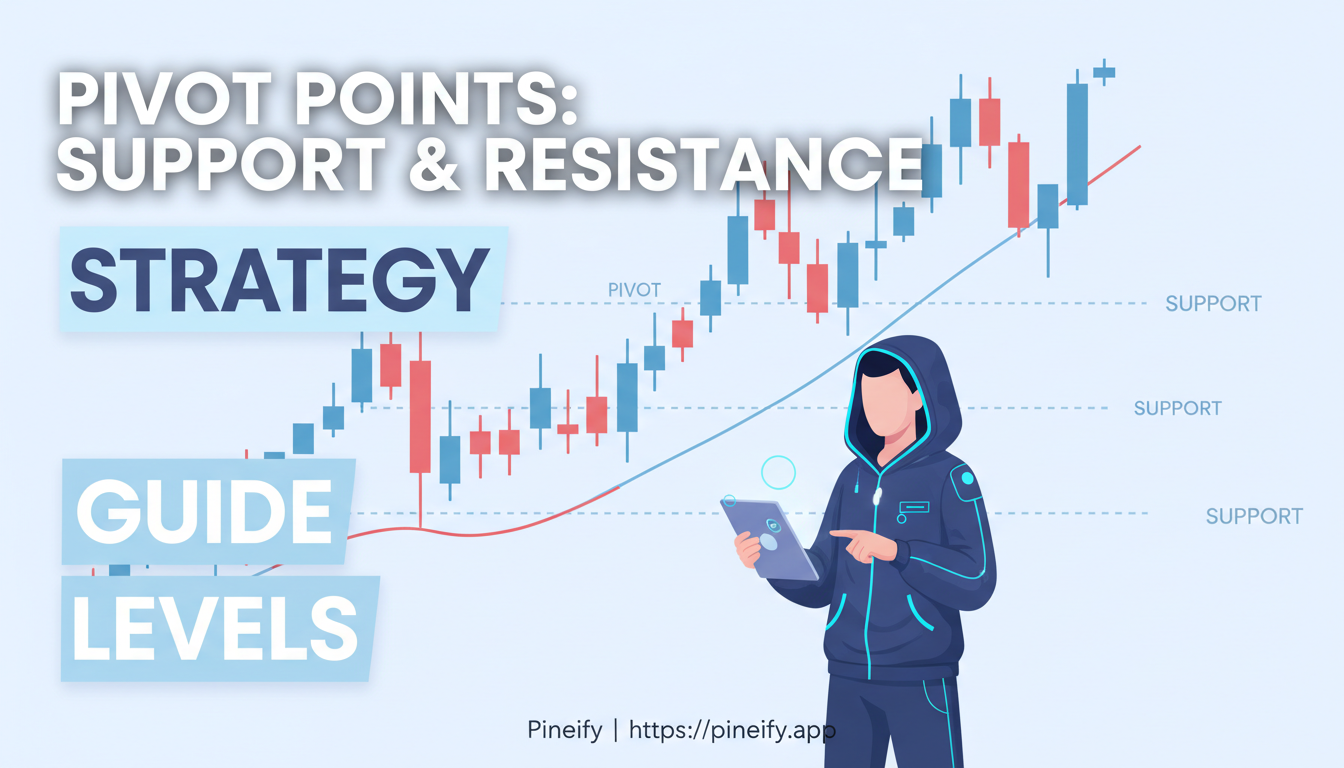
A pivot points trading strategy starts from period-based levels that turn selected OHLC data into reference prices for the next period. Their arithmetic is reproducible when the formula and data are fixed; whether a trading rule built around those prices has an advantage is a separate question. A support or resistance label is not evidence that price must stop there.
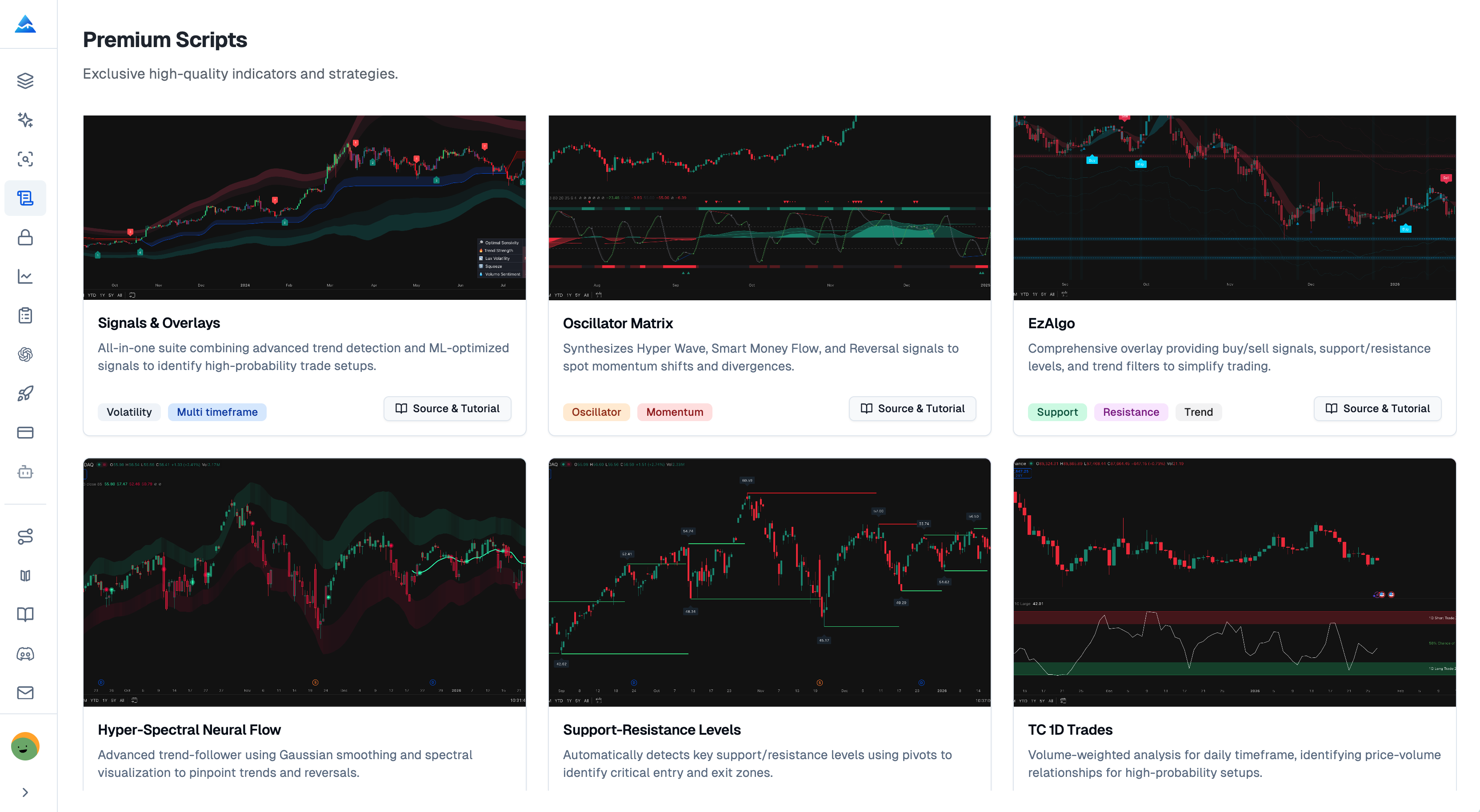
Pineify Premium Scripts provides an account-gated route to script source and tutorials. The practical value to assess is whether you can inspect, understand, and maintain the particular script you need. A premium label does not establish institutional quality, non-repainting behavior, or better returns than a free script.
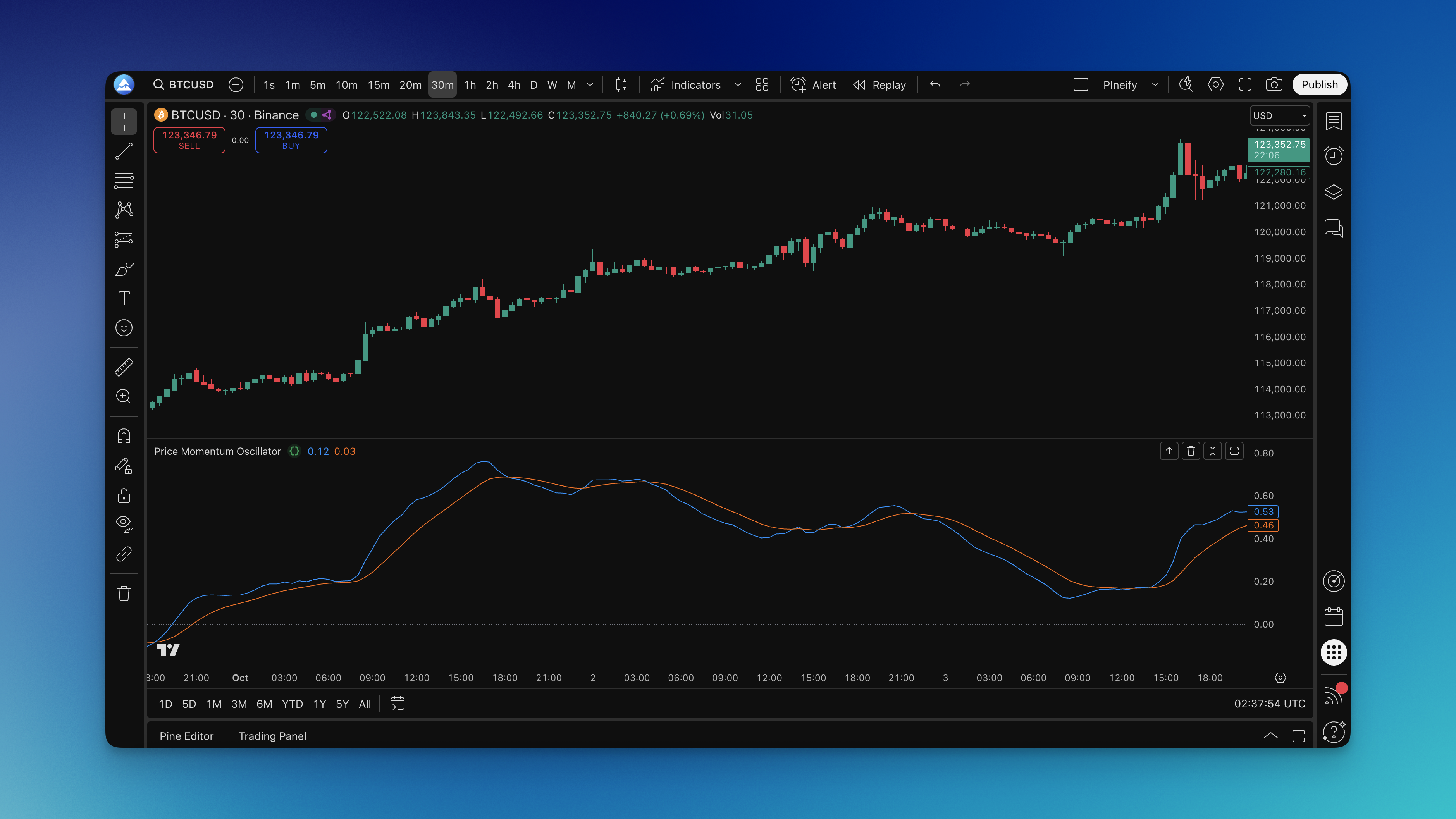
The Price Momentum Oscillator smooths percentage price changes to show their direction and persistence. Smoothing reduces short-term variation but also delays the response; it does not let the indicator observe future prices. Before comparing PMO charts, check the smoothing formula as well as the three displayed lengths.
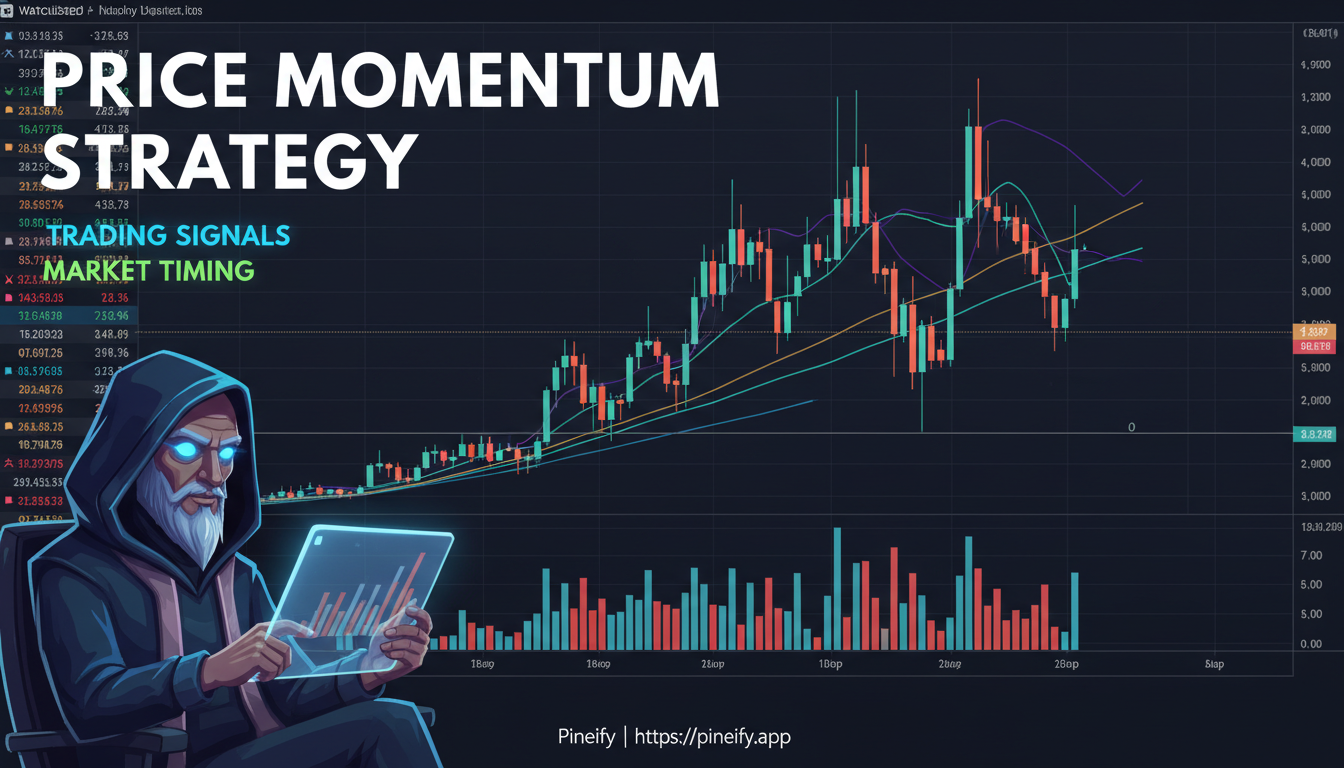
A Price Momentum Oscillator strategy needs more than a bullish or bearish crossover. It needs a fixed PMO implementation, a precise signal time, executable orders, and rules for exits and position size. Crossovers, zero-line conditions, and divergence are different hypotheses and should be evaluated separately before combining them.
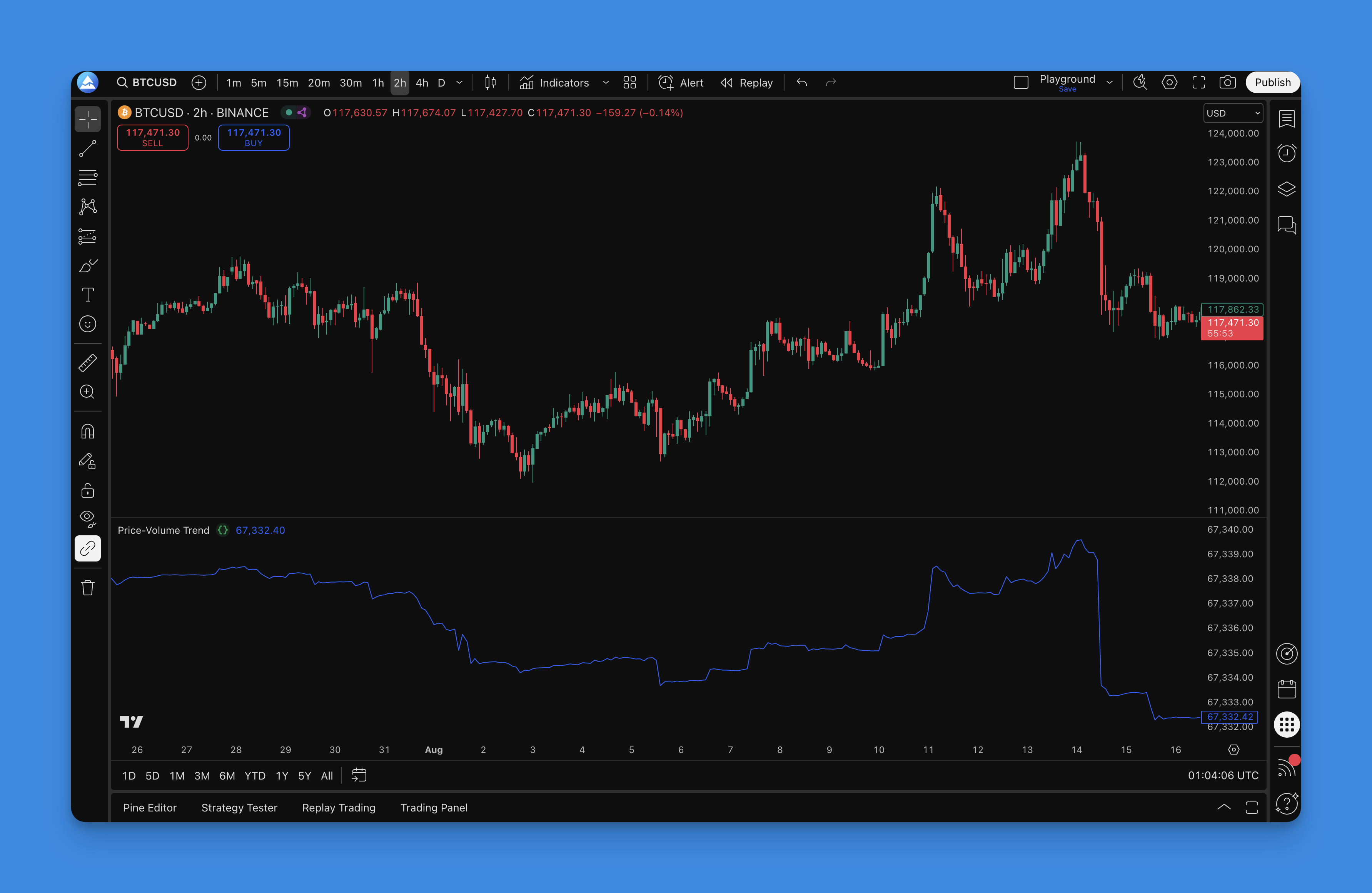
Price-Volume Trend (PVT) accumulates volume weighted by the proportional change in closing price. It does not simply add all volume on up bars and subtract all volume on down bars; that describes On-Balance Volume. PVT is a transformation of price and volume data, not a direct measurement of who bought or sold.
Prop firms that use TradingView are firms that offer a TradingView.com account connection or embed TradingView charts in another platform. Prop firms can offer a connection to TradingView.com or a separate platform containing TradingView charts. Those are different products. Before buying an evaluation, verify the exact account, platform, and order connection you will receive. A familiar chart does not establish Pine Script support, automated execution, or faster fills.
A backtesting engine and a report analyzer solve different problems. PyAlgoTrade and Backtrader execute strategy logic against supplied data. Pineify's Backtest Deep Report analyzes an existing TradingView trade export. It can replace part of a reporting workflow, but it does not rerun a Python strategy or reconstruct missing market data.
QuantConnect backtesting runs algorithm rules through the LEAN engine using historical data and configured execution models. The engine provides a framework for reproducible simulations; the realism of a particular result depends on the data, timestamps, brokerage settings, and strategy logic. The example is an implementation demonstration, not performance evidence.