Option Flow Data: Trade Smarter With Institutional Signals

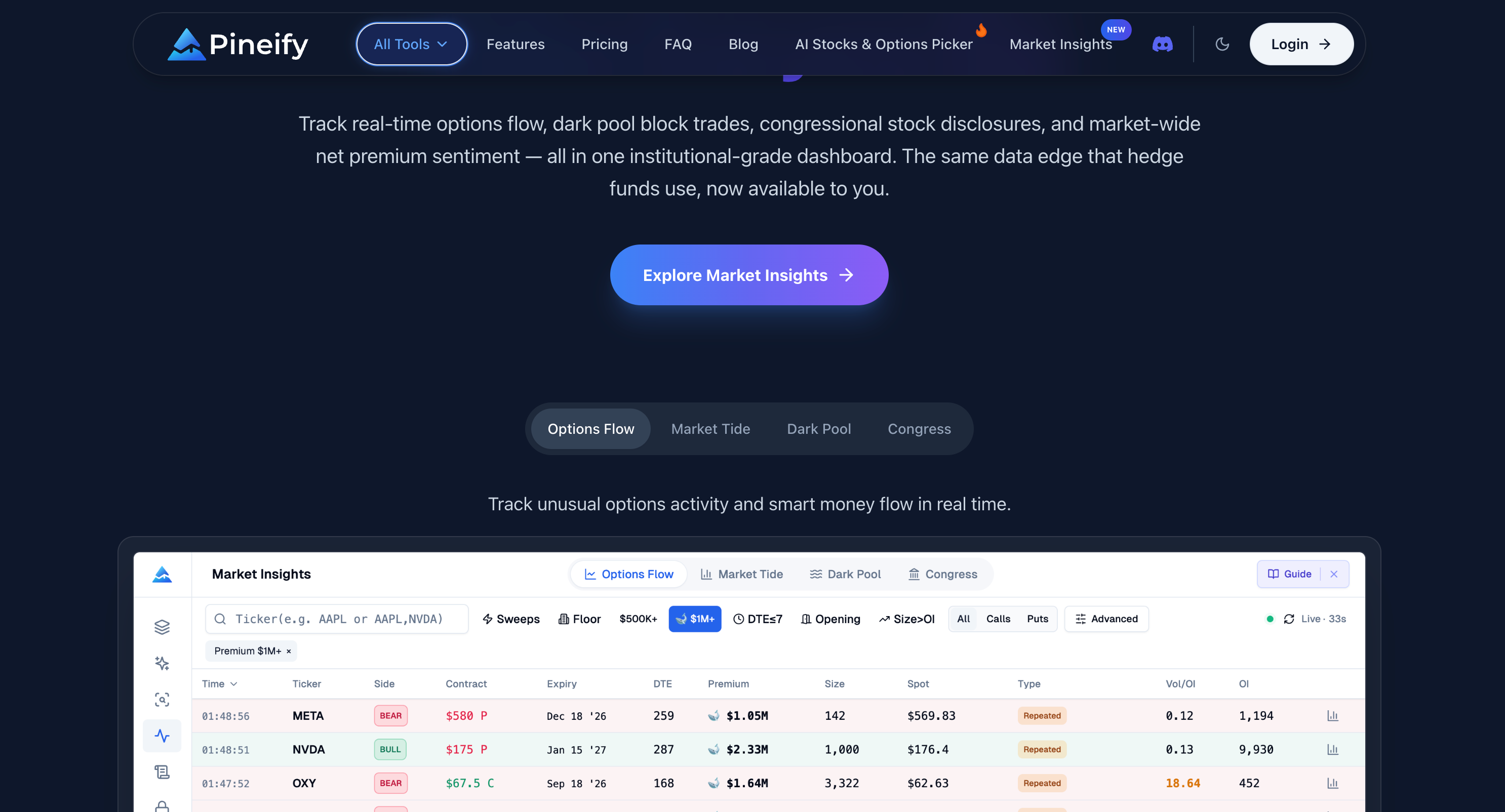
Option flow data is the record of every large options trade executed across U.S. exchanges in real time. It shows you where institutional money is moving before the stock price fully catches up. I've been watching this data for about two years now, and it changed my approach to entry timing. When you see a 500-contract sweep of TSLA calls hit multiple exchanges in under a second, that's not a retail trader guessing — it's a fund making a high-conviction bet.
What Option Flow Data Actually Tells You
Picture every large bet in the options market streaming past you as it happens. That's option flow data. It tracks big volumes of options contracts across all exchanges in real time — the ticker, strike price, expiration, premium paid, and whether it's a call or a put.
The reason this matters: options give traders control over large amounts of stock for a small upfront cost. Institutions use them for high-conviction bets. These moves often happen before larger stock trades, which is why option flow can act as a leading indicator rather than a lagging one.
The trick is filtering by trade size. Most platforms skip trades under 100 contracts and focus on block orders worth hundreds of thousands or millions. When you see that scale, you're looking at professional money, not casual retail.
Here's what each data field means in practice:
| Field | What It Means | Why It Matters |
|---|---|---|
| Ticker | The stock symbol | Tells you which stock the trade targets. |
| Strike Price | The price target for calls or puts | Shows the specific level the trader is betting on. |
| Expiration Date | When the contract expires | Near-term expirations signal urgency; far-dated ones may be hedges. |
| Premium Paid | Total cost of the trade | Big dollar amounts suggest institutional involvement. |
| Sentiment Tag | Call (bullish) or Put (bearish) | Instant directional read on the trade. |
| Trade Type | How the order filled — single, sweep, or split | Sweeps across exchanges signal someone wanted in fast. |
I pay closest attention to expiration timing. A trader dropping serious money on calls expiring in two weeks is making a bold short-term bet. The same size order six months out could be a hedge. In my experience, the tighter the expiration window, the more the trade reflects genuine conviction about near-term direction.
Unusual Options Activity: Separating Signal From Noise
The options market is a noisy room. Most trades are background chatter. Unusual Options Activity (UOA) is when trading in a specific contract spikes far above normal levels — it suggests someone may have an edge or is placing an outsized bet.
Here's what I look for:
- Volume vs. open interest: When daily volume exceeds total open interest, new positions are flooding in. That's more meaningful than people just closing existing ones.
- Relative volume spikes: A 2.0x relative volume means the contract is trading at twice its normal pace. Something is happening.
- Large block trades: A single trade worth $500K or more is almost certainly institutional. I've seen this pattern repeatedly with AAPL before earnings beats.
- Sweep orders: Filled across multiple exchanges in seconds. Urgency equals conviction. I haven't tested every sweep scanner on the market, but I've found that sweeps during the first 30 minutes of trading carry more weight than late-afternoon ones.
- Out-of-the-money call clustering: Heavy buying of cheap OTM calls right before earnings can hint at informed positioning. I saw this with NVDA before their Q3 2024 report — the flow was right, though I didn't act on it fast enough.
One shift has made this skill critical. Zero-days-to-expiration (0DTE) options now dominate SPX volume:
| Year | % of Total SPX Options Volume |
|---|---|
| 2020 | ~17% |
| 2025 | >50% |
With over half of SPX options expiring same-day, intraday flow is constantly moving the market. If you're not watching these short-term signals, you're missing a big part of the picture.
A Practical Framework for Reading Option Flow
No single unusual trade is a signal by itself. You need to connect multiple data points. Here's the process I follow.
Step 1: Classify the Execution
Was the trade a sweep (filled across exchanges instantly — urgency) or a split order (broken into small pieces — an institution trying not to tip its hand)? I generally favor sweeps over splits for short-term trades. Sweeps tell me someone wanted in now, and that urgency is often rewarded.
Step 2: Check Timing and Strike
Focus on trades where the expiration is near and the strike is close to the current price. These carry real directional weight. Cheap OTM options with a week left are usually lottery tickets unless there's a clear catalyst like earnings.
Step 3: Verify With Price Action
Option flow is a clue, not a strategy. When I see a big call buy, I check the chart immediately. Is the stock breaking above a resistance level? If the flow and the price agree, the signal is much stronger. For more on this technique, here's a guide on How to Draw Trend Lines in TradingView.
Concrete example: A stock sits at $90. Someone buys 5,000 contracts of $100 calls expiring in two weeks. Interesting, but don't act. Watch what happens next. If the stock breaks above $92 and holds, now you have confirmation. The flow and the price momentum are telling the same story.
Step 4: Scale In, Don't Chase
Institutions build positions gradually. When you spot a massive sweep, resist the FOMO. Wait for a 1-2% pullback before entering. You'll get a better risk-reward ratio than chasing the high.
Market Tide: Measuring Broad Sentiment
Think of the options market as a conversation about where traders expect prices to go. Market Tide measures the total premium flowing into calls versus puts across the entire market. It's a macro mood ring.
When the Market Tide line rises, bullish flow dominates. When it falls, caution is spreading. The most useful signal I've found is divergence: when Market Tide and the actual price index move in opposite directions. That typically means momentum is running out of gas.
Where it gets practical is sector-level data. If money is quietly rotating out of tech (via puts) and into healthcare (via calls), you're watching a capital shift in real time — often before the headlines catch up. I use this to adjust my sector allocation for the week ahead.
Dark Pool Data and Congress Trading
Options flow is powerful, but it's only one piece. Two other data types fill in the gaps.
- Dark Pool Prints: Large stock trades executed off public exchanges. When a pension fund or mutual fund buys millions of shares through a dark pool at a specific price, it suggests hidden support at that level. The institution has a strong interest in keeping the stock above their entry price.
- Congress Trading Disclosures: The STOCK Act requires lawmakers to report their trades (with up to 45 days delay). A cluster of similar trades around a major vote can signal political insight that isn't public yet.
Tracking all these streams separately is a lot of work. Pineify Market Insights pulls options flow, Market Tide, dark pool prints, and congressional trades into one dashboard. It processes over 50,000 options trades daily and updates in near real time. This kind of intelligence was once reserved for institutional desks. For a comparison of AI tools that help act on this data, see Fiscal.ai vs Pineify AI Finance Agent.
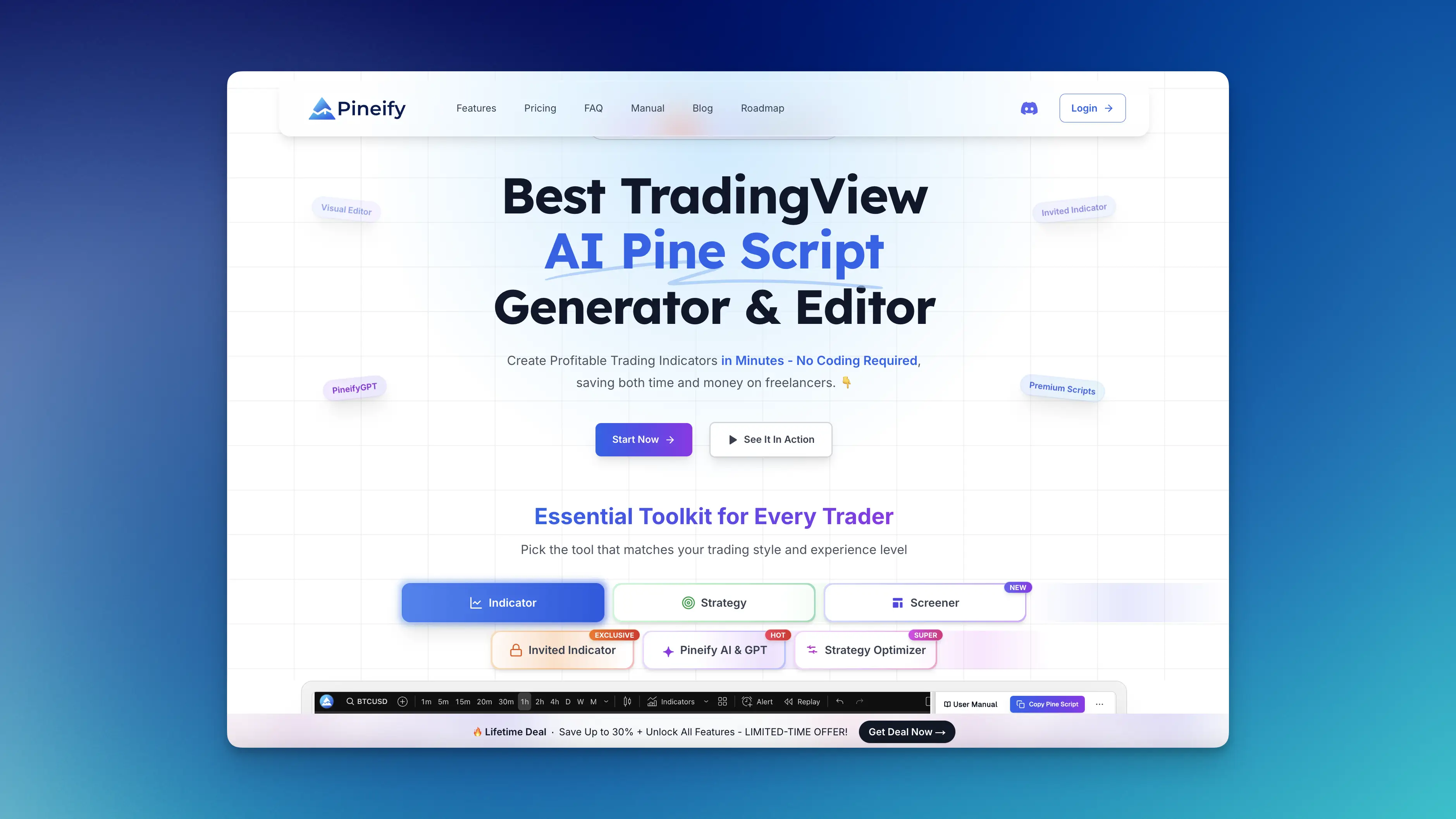
Pineify connects insight to execution in one AI trading workspace. Beyond tracking institutional moves, you can research tickers with the AI Finance Agent, build custom alerts with the Pine Script AI Agent, and log trades in the Trading Journal. That said, I'll be honest: the platform still has a learning curve for new users, especially around setting up alert conditions across different asset types. It's not perfect yet, but it covers the workflow from discovery to execution better than anything else I've tried.
Mistakes I've Made With Option Flow (So You Don't Have To)
I've tripped up plenty of times. Here's what I learned:
- Following the flow blindly. A huge trade isn't always a directional bet. It could be a hedge, a spread, or portfolio insurance. Don't assume every block trade means what you think it means.
- Ignoring context. Always check the calendar. Is there earnings tomorrow? An FDA decision next week? Context separates real signals from noise.
- Overweighting one trade. One sweep is interesting. Ten sweeps in the same direction over a week is a pattern. Wait for confirmation.
- Skipping risk management. The clearest flow signal can be wrong. I got burned on a SPY put sweep in early 2024 — looked perfect, then the market reversed in two hours. Use defined-risk strategies and keep position sizes sensible. Staying in the game beats hitting one home run.
For building the automated tools to catch these signals, check out the Best AI Tools for Pine Script.
Getting Started With Flow-Based Trading
Option flow gives you a real-time view of where big money is placing bets. The most consistent traders I know look for strong conviction before the price catches up.
Here's how I'd start if I were new to this:
- Watch a live dashboard first. Go to Pineify Market Insights and just observe. See how sweeps, blocks, and dark pool prints move throughout the day. No action needed — just build intuition.
- Paper trade for three weeks. Use a paper account to follow flow signals. Pay attention to which patterns (sweeps vs. blocks, near-term vs. far-dated) lead to actual price moves in the stocks you track.
- Wait for a second reason to act. Never trade on flow alone. Wait for it to line up with a chart pattern, a catalyst, or repeated flow in the same direction. For instance, combining flow readings with the Donchian Channel breakout strategy creates a repeatable entry and exit framework.
- Journal every trade. Write down what you saw, why you acted, and what happened. Over time, patterns emerge in your specific approach. This is the single best habit for improvement.
The tools are the window. The skill is learning what you're actually seeing through it.
Can regular traders access real-time option flow data?
Yes. It used to be limited to institutional desks, but now any trader can get live feeds from platforms like Pineify Market Insights, scanners for unusual trades, and sentiment dashboards. The playing field is more level than it's ever been.
What is the difference between open interest and volume in options?
Volume is today's action — how many contracts traded in this session. Open Interest is the total number of contracts still open, not yet closed or exercised. When daily volume exceeds open interest, new positions are opening aggressively. That's the kind of activity worth paying attention to.
Can I trade successfully using only option flow data?
The data contains a real signal, but relying on it alone is risky. You need to combine flow with technical levels, upcoming catalysts, and solid risk management. Flow is one powerful piece of the puzzle — not the whole picture.
What is a sweep order in options trading?
A sweep is a large order filled by buying or selling contracts across multiple exchanges at once. The buyer prioritizes speed over getting the best price on one exchange. That urgency makes sweeps one of the strongest signals of high conviction in the options market.
How is Market Tide different from regular options flow?
Standard options flow shows individual trades. Market Tide zooms out and adds up all premium spent on calls versus puts across the entire market or within sectors. It gives you a macro directional read — whether big money is broadly bullish or bearish right now.
What are dark pool prints and why do traders watch them?
Dark pool prints are large stock trades executed off public exchanges, typically by institutions. A big buy order at a specific price hints at a hidden support level — the institution placing the trade wants to protect the value of its position.
How do 0DTE options affect intraday option flow signals?
Zero-days-to-expiration options now make up over 50% of all SPX options volume, up from ~17% in 2020. Because they expire the same day, their flow creates constant intraday pressure on stock prices. Tracking 0DTE flow shows you urgent short-term directional bets that are critical signals for day traders.