How to Read Options Market Flow: Smart Money Signals

Every single trading day, over $500 billion in options premium trades hands. But here's the catch—most everyday traders only notice a big stock move after it's already happened. The traders who seem to spot these shifts early aren't just watching price charts. They're tuned into something deeper: options market flows news. This is the live feed of what big institutions are actually doing—the real-time story of where the smart money is placing its bets.
Options market flow is the combined stream of all options trades, filtered to highlight the large, high-premium orders that everyday investors rarely place. It shows you what hedge funds and prop desks are doing before the broader market catches on. For context on how this fits into strategy development, I've found that pairing flow data with a simple breakout strategy in Pine Script gives a more complete picture.
I watched TSMC options flow spike 300% above its 20-day average on May 12, 2026—three days before the stock broke out 7%. Signals like that are why I pay attention to this data.
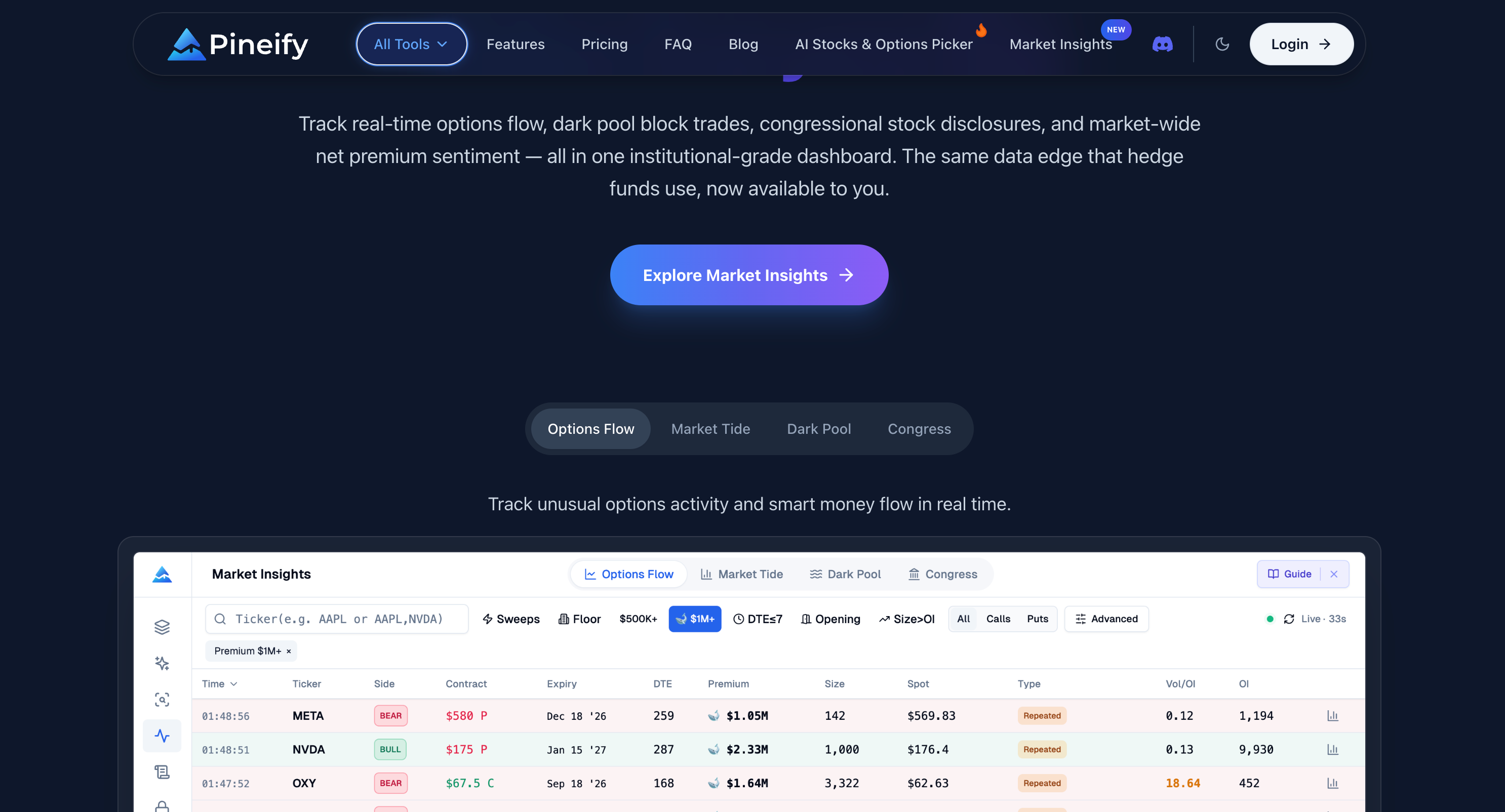
What Is Options Market Flow?
In simple terms, options flow is the combined stream of all options trades happening in the market. But to find the signal in the noise, most people focus on the large, high-premium orders—the ones too big to be from everyday investors.
For example, a service like Barchart filters for the top 100 trades in a stock where the trade size is over 100 contracts. This helps cut out the small, routine trades and highlights what the heavy hitters are doing.
When hedge funds, prop trading desks, and big money managers make a major move in options, it leaves a footprint in the trading data. Options market flows news is all about spotting those footprints in real time. It's a way to see where the most confident money is going before the rest of the market reacts.
You might hear this data called a few different things:
- Unusual Options Activity (UOA) — A sudden, significant spike in trading volume for a particular option.
- Order flow sentiment — The overall direction (bullish or bearish) of the big institutional trades.
- Smart money flow — High-cost trades that imply strong conviction, not just casual speculation.
Why Keeping Up with Options Flow Matters Now
Options trading isn't just for professionals anymore. Over the last few years, it's gone mainstream, and the numbers are staggering. In 2021, nearly 10 billion options contracts were traded. That's a third higher than the previous record and more than double what it was just two years earlier in 2019. When you zoom in on single stocks, the jump is even bigger.
All this activity means there's a huge amount of data swirling around every day. The real trick is figuring out what's useful and what's just background chatter. This is where watching the "flow" — the actual buying and selling of options contracts in real-time — has become essential.
A few years back, this kind of insight was locked away. The average person couldn't see what big institutions or a wave of retail traders were actually doing until it was too late. Now, that's changing.
Here's a real-world example: back in early April 2026, data from a major trading firm showed something interesting. Even though the stock market headlines looked calm, the options market was telling a different story. Traders were getting defensive, buying more puts for protection and leaning toward selling. It was a quiet signal of nervousness that the main indexes hadn't yet reflected.
Being able to spot that shift as it happens is powerful. It's like having a window into what the market is really feeling, not just what it's saying. That's why understanding options flow has moved from a niche skill to something every informed trader needs to pay attention to. I've found that TradingView is worth it in 2025 specifically for its integrated data and analysis tools that make flow tracking manageable.
How to Make Sense of Options Flow: A Practical Guide
Trying to understand options flow can feel like learning a new language. But at its heart, it's about piecing together clues to see what other traders might be thinking. Here's a straightforward way to break it down.
Start With Where the Trade Happened: The Bid-Ask Spread
Every single options trade gets filled at a specific price. Where that price lands tells you a lot about the trader's urgency and conviction. The "bid" is the highest price a buyer is offering, and the "ask" is the lowest price a seller will accept. The space between them is the spread.
Here's what to look for:
| Execution Type | What It Usually Means |
|---|---|
| Above Ask | Strong bullish urgency. The buyer was so eager they paid more than the lowest selling price to get the trade done now. |
| Below Bid | Strong bearish urgency. The seller was so keen to exit or hedge that they accepted less than the highest buying price. |
| At Mid | A negotiated deal, often big and institutional. The direction isn't as clear-cut—it could be hedging or a complex strategy. |
If you see a lot of trades happening "above ask," it's a clear sign that buyers are aggressively stepping in, willing to pay a premium for immediate action.
Why it matters: The execution price reveals conviction. Above-ask means the buyer isn't price-sensitive—they want in now. Below-bid means the same for sellers. What can go wrong: A single above-ask trade could be part of a complex multi-leg strategy where the net direction is neutral. Never read a single print in isolation.
Spotting Urgency: Sweep Orders vs. Single Trades
Next, look at how the trade was done. A sweep order is a big clue. This happens when one large order is automatically broken up and sent to multiple exchanges all at once to fill it quickly.
Why does this matter? It shows serious urgency. The trader doesn't want to wait and risk the market price moving; they want their position now. For example, if you see sweeps for out-of-the-money call options right before a company's earnings report, it often means someone is betting on a big, immediate stock move.
Why it matters: Sweeps bypass the normal order book to get filled immediately, which means the trader is willing to pay a premium for speed. What can go wrong: Some algos use sweep-like patterns to mimic institutional flow and lure retail traders into bad positions.
What the Expiration Date Tells You
The expiration date of the traded option answers a key question: "How soon do they think this will happen?"
- Weekly options (expiring in 0-7 days): This is a "this week" play. The trader is likely betting on a specific upcoming event, like an earnings call or a Fed announcement.
- Monthly options (expiring in 30-60 days): This suggests a near-term directional view. They expect a move in the coming month or two.
- LEAPS (expiring in 6 months to 2+ years): This is typically a long-term, high-conviction play. Big institutions or investors use these for major, multi-year theses on a company's future.
Why it matters: It tells you the trader's expected timeline. A cluster of weekly OTM calls before earnings is a short-term bet. Consistent LEAPS buying over weeks suggests long-term accumulation. What can go wrong: Short-dated options are highly sensitive to time decay. Even if the trade is right on direction, bad timing can kill the position.
Market Tide: Seeing the Market's Big Picture Through Options Flow
Looking at single trade alerts shows you what's happening with specific stocks. But Market Tide – which is the total net call premium minus the net put premium across the entire market – shows you what's happening with the market's overall direction.
Think of it this way: it's more precise than common gauges like the VIX or the put/call ratio because it's based on real money being put to work. I prefer Market Tide over raw VIX data because it tracks actual capital deployment, not just implied volatility. When big players are actively buying calls, the total net premium goes positive. That's actual capital confirming a bullish outlook, not just a shift in sentiment.
Here's what paying attention to Market Tide can help you see:
| What Market Tide Reveals | Why It Matters |
|---|---|
| Sector rotation as it happens | If options premiums in tech are falling while call buying in energy and healthcare jumps, money is likely rotating sectors—often days before the price charts fully show it. |
| Early warning divergences | If the S&P 500 hits a new high but the net premium is falling, it can mean institutions are quietly hedging. It's a classic sign to pay closer attention. |
| Confirmation for your trades | Before making a big directional bet, checking Market Tide gives you context. Is there a macro tailwind at your back, or are you facing a headwind? |
Dark Pool Intelligence: Seeing the Hidden Half of the Market
If you're only watching options flow, you're missing a huge part of the story. A massive amount of trading happens out of sight, in places called dark pools.
These are private trading venues where big players like pension funds and mutual funds move enormous blocks of stock. They do this to avoid tipping their hand to the public market. About 40% of all U.S. stock trading volume now happens in these dark pools.
How do you get a glimpse of this hidden activity? Tools like Pineify Market Insights track these large, private trades in real time. They figure out whether it was a buy or a sell by comparing the dark pool price to the public market price (the NBBO). This lets you see things the regular tape doesn't show:
- Hidden Support and Resistance: You can spot the exact price levels where institutions were quietly building or dumping their positions, which often become important levels later on.
- Accumulation Patterns: When you see consistent dark pool buying at a specific price over several days, it can be a strong clue that a stock is being gathered up before a potential move higher.
- Mega Block Alerts: A single dark pool trade worth over $50 million isn't just big money—it's a major decision by a huge fund. Spotting these rare prints can signal a significant shift.
By itself, options flow tells you about market sentiment and bets on the future. Dark pool data shows you what the giants are actually doing right now with the stock itself. When you put the two together, you get a much clearer, more complete picture of what's really moving the market.
Congress Trading: What the Insiders Know (And What It Means for Your Investments)
You know how we always joke that politicians seem to have a knack for timing the market? There's data to back that up. Since the STOCK Act passed in 2012, members of Congress have been required to disclose their stock trades within 45 days. When researchers analyzed these filings, they found something striking: congressional portfolios consistently beat the S&P 500, often by 5% to 10% a year.
That's not just luck. Tracking these disclosures is a real, albeit unconventional, piece of market intelligence. It's like getting a glimpse into what the people closest to pending laws and national decisions are betting on with their own money.
This isn't about conspiracy theories—it's about following publicly available data. Tools like Pineify's Congress Trading module track every disclosed trade from all 535+ members, flag when reports are filed late, and let you sort by party, the chamber they're in, or by specific stock tickers.
From this data, a few particularly telling patterns emerge:
- Trading Before a Law Moves: When a lawmaker buys or sells stocks in an industry just before related legislation suddenly gains momentum, it's worth watching. They have a front-row seat to what's coming down the pipeline.
- Committee-Focused Bets: Members on powerful committees (like Financial Services or Defense) sometimes trade stocks in those sectors ahead of major regulatory or budget changes. Their non-public insight can translate into action.
- The Bipartisan Signal: This might be the strongest clue. When both Democrats and Republicans quietly accumulate shares of the same company, it often points to a shared, behind-the-scenes confidence in that stock's future. It cuts through the political noise.
This data adds a third dimension to your research. It doesn't replace solid fundamental or technical analysis, but it can provide unique context for why certain stocks might be moving before big news becomes public knowledge.
Ever wondered where traders go to spot big, unusual bets in the options market? Here's a look at some of the top platforms that track and display options market flows.
| Platform | Key Strength | Data Coverage |
|---|---|---|
| Pineify Market Insights | All-in-one: Options Flow + Dark Pool + Market Tide + Congress | 50,000+ trades/day, <1s latency pineify |
| Barchart Options Flow | Clean, institutional-grade flow view | Top 100 trades per underlying barchart |
| OptionStrat Flow | Complex multi-leg strategy detection | Real-time, retail + institutional optionstrat |
| Fintel Options Flow | Historical data + real-time alerts | Near real-time institutional trades fintel |
| Unusual Whales | Community-driven unusual activity | Real-time + Congress data unusualwhales |
| InsiderFinance | Award-nominated UOA detection | Real-time alerts insiderfinance |
What makes Pineify unique is how it pulls everything together. Instead of checking multiple screens, it combines options flow, dark pool activity, broad market sentiment (Market Tide), and congressional trading alerts all in one place. It updates in under a second while tracking over 50,000 options trades a day, giving you a complete view across major market sectors. pineify
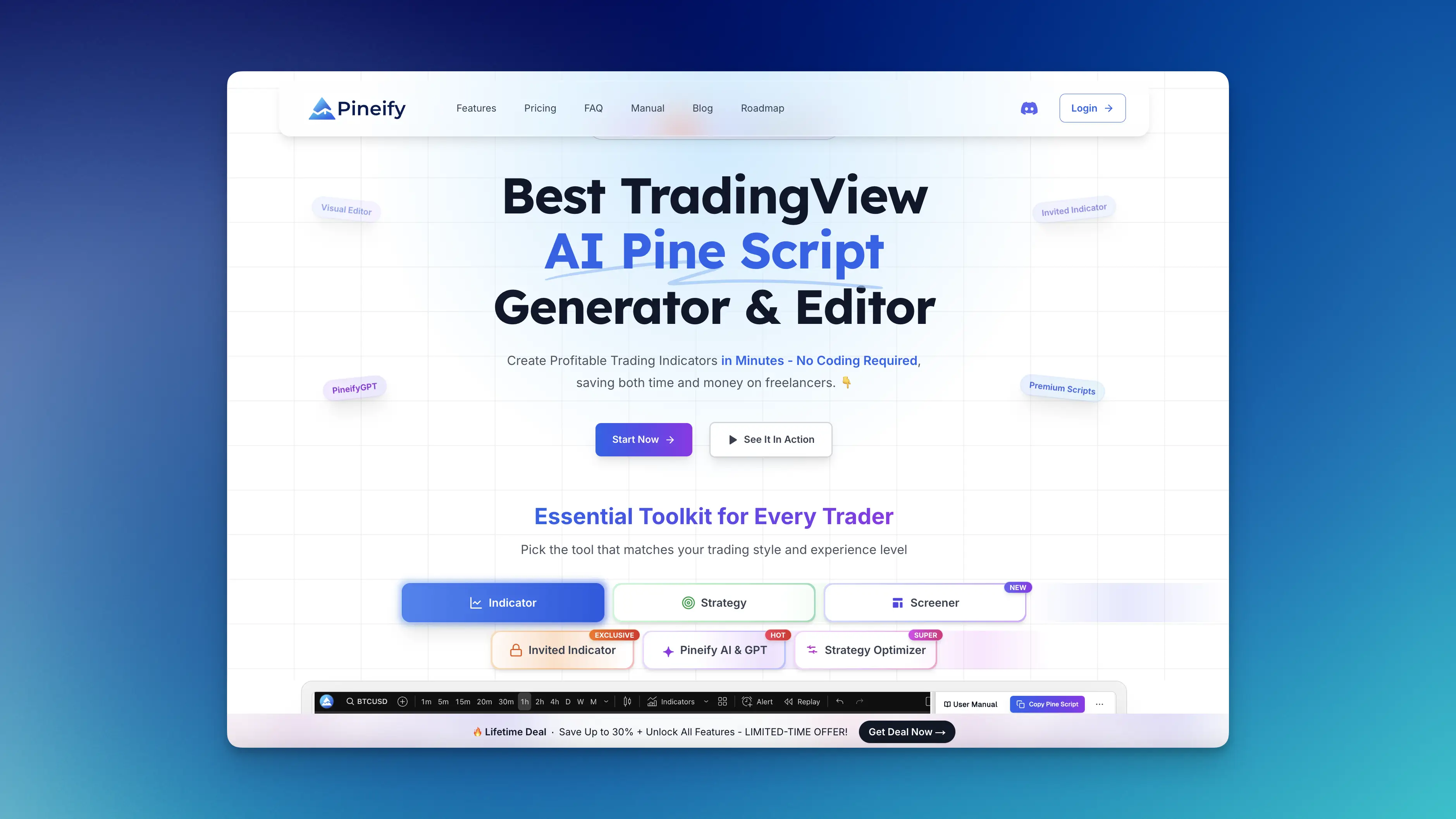
This unified dashboard is part of a larger 10-in-1 AI trading workspace designed to help traders build, test, and execute strategies faster. Beyond market insights, Pineify includes tools like an AI Pine Script generator to turn ideas into TradingView code, an AI Finance Agent for real-time research, and a predictive AI Stock Picker—all available with a one-time payment for lifetime access. It's a complete suite trusted by over 100,000 traders to manage their entire workflow from idea to execution. For more on how AI is transforming trade analysis, see our review of the top AI Pine Script generators for TradingView.
How Professional Traders Stack the Evidence: Using Multiple Data Points
The biggest advantage isn't from a single flashy signal; it's when different pieces of the puzzle all start to fit together. Here's a real-world look at how a strong trade idea comes together:
- The options market shows a big bet: Someone makes a sizable, bullish options trade on a mid-sized tech company.
- Big money moves quietly: Dark pool data reveals large institutional blocks of stock being bought at today's prices.
- The overall sector looks healthy: Broader data shows the entire tech sector is seeing more bullish than bearish betting.
- Someone with insight buys: Public records show a key member of a relevant government committee recently bought shares of the same company.
Four separate sources—each with its own perspective—all suggesting a similar story. That's how experienced traders build real confidence. They don't jump at the first alert. They wait for different types of data to line up and point in the same direction.
Q&A: Understanding Options Market Flows
When I talk to traders about options flow, the same questions keep coming up. Here's how I'd answer them.
Is options flow data useful for long-term investors, or only day traders? It's helpful for both, just in different ways. Day traders watch the real-time flow for short-term moves. Long-term investors can look for different clues—consistent dark pool buying or increased activity in LEAPS. Those can be signs that smart money is building a position over many months, not days.
What's the difference between unusual options activity and standard options flow? Standard options flow is a list of all the bigger trades that happen. Unusual activity filters for trades where the volume explodes compared to what that option normally sees—like a stock suddenly trading ten times its usual call volume. That kind of spike often happens when someone knows something might be coming.
Can I track options flow for free? You can get started for free. Some financial data sites offer basic options volume and open interest at no cost. But real-time alerts, advanced filters, or tools that guess whether a big trade is bullish or bearish typically require a paid service. I haven't tested every platform for latency, but Pineify's sub-second updates match what I see on my broker's professional feed.
How reliable are options flow signals? They're a powerful clue, but never a sure thing. A massive options trade could be a straight bet on a stock moving, or it could be part of a complex hedge. That's why I don't rely on options flow alone for entries—dark pool confirmation is where the real conviction comes from for me. The story is strongest when multiple signals agree.
Where can I see institutional-grade options market flows news in one place? Some services aggregate key streams—options flow, dark pool activity, market momentum, and congressional trading reports—onto a single dashboard. Tools like Pineify Market Insights pull these together, giving you a consolidated view similar to what professional trading desks use. It's an affordable alternative to Bloomberg Terminal.
Your Next Steps: Start Using Options Flow Data
Getting a feel for options flow can change how you see the market. If you're ready to get started, here's a straightforward path you can follow today.
- Watch a Live Feed: Bookmark a live options flow tool like Pineify Market Insights, Barchart, or OptionStrat. Don't trade from it at first—just spend time observing what real, large trades look like as they happen.
- Spot the Sweeps: Over a week or two, focus on "sweep" orders. When you see a big burst of call sweeps in a stock, make a note and watch what the stock does next. You'll start to notice which sweeps tend to lead to bigger moves and which fizzle out.
- Check the Overall Mood: Before placing any trade, take five seconds to look at the net premium flow or "Market Tide." Are institutions net buying calls (bullish) or puts (bearish)? Avoid setting up a trade that's fighting that larger flow, even if your chart looks perfect.
- See Where the Big Money Sits: Use dark pool data to spot price levels where a lot of institutional volume has traded. These levels often act as strong support or resistance.
- Keep an Eye on Congress: Set up a simple alert for when members of Congress report trades in stocks you're watching. It's not a signal on its own, but it's useful context.
- Wait for Confirmation: The real edge comes from convergence. The best setups happen when the options flow, the dark pool levels, and the chart pattern are all telling the same story.
To systematically test how such insights fit into your broader strategy, use a tool for MT4 backtesting report analysis.
A great place to start is by watching the live flow at Pineify Market Insights—it helps translate what's happening into a clearer picture.