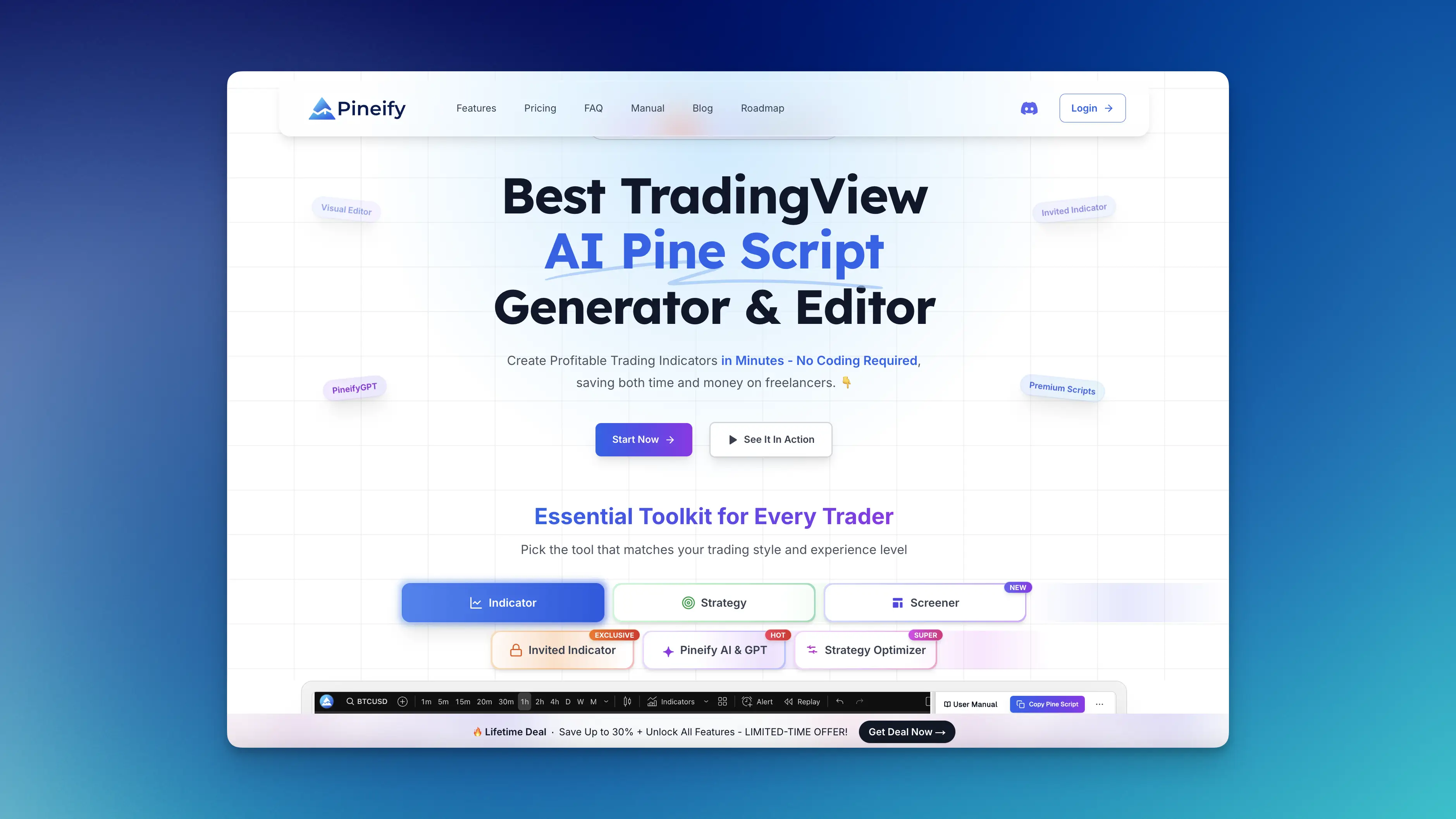
Pineify Market Insights: Dark Pool Trading Data Platform Review

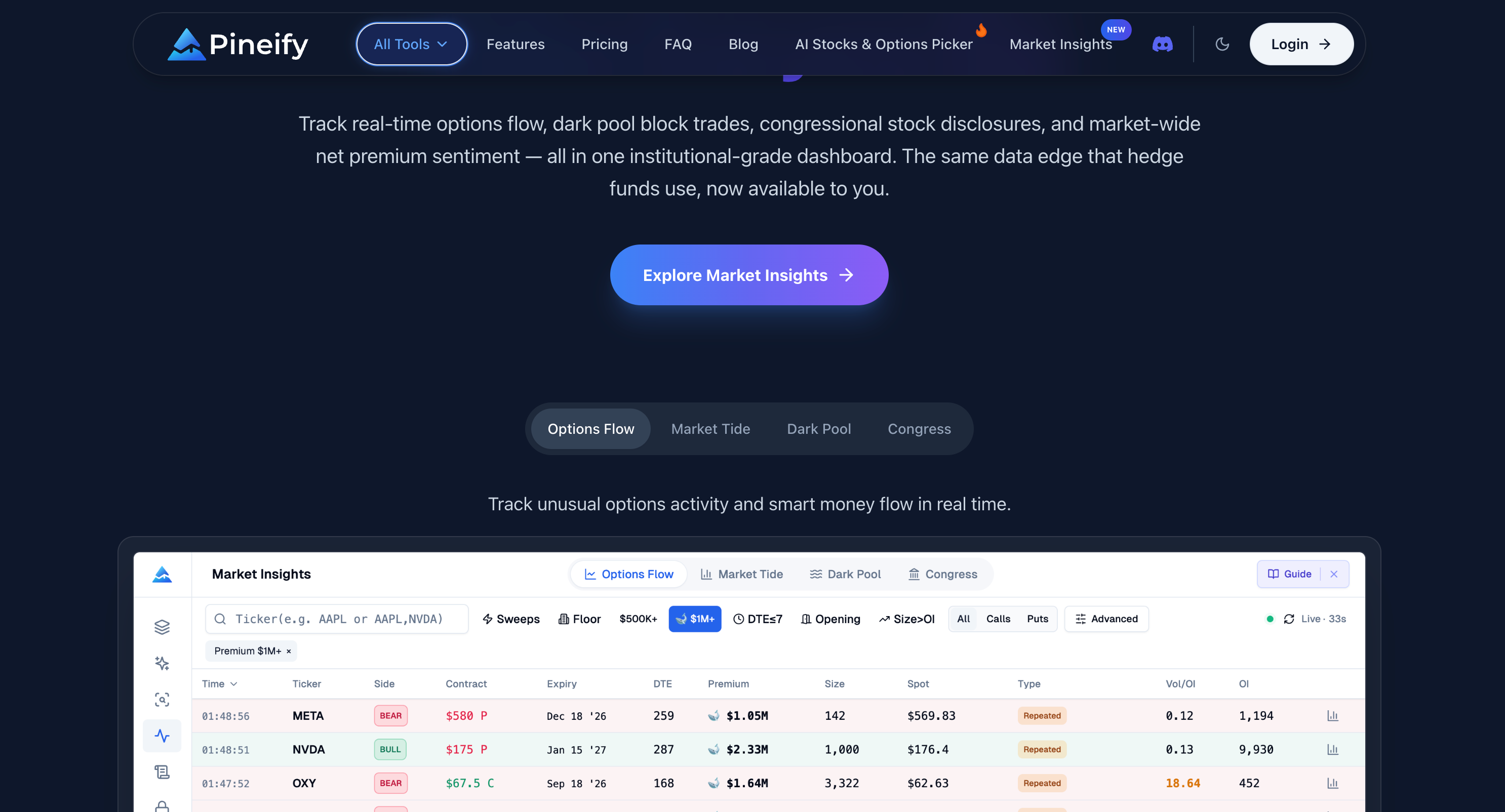
Most dark pool data feeds dump raw trade prints on a screen and call it a day. Dark pool trading data refers to records of large block trades executed off public exchanges, where institutions move shares without immediate price impact. Pineify Market Insights does something different — it connects those hidden institutional trades to options flow, market-wide sentiment, and congressional trading activity in a single dashboard.
I've been tracking TSLA dark pool prints since January 2026, and the level clustering at $280 was a clear warning before the Feb 3 drop. When I checked AAPL on Feb 10, the heavy dark pool buying at $195 lined up with the recovery that followed. Having that context in one place beats bouncing between three separate tools, which is what I used to do.
That said, Pineify's direction inference isn't perfect. It guesses buys and sells based on NBBO midpoint logic, and in fast-moving markets that estimate can lag behind the actual tape. I haven't tested their API latency against Bloomberg's feed, so I can't compare that directly.
Why dark pool activity matters
Major institutions place large orders in dark pools specifically to avoid moving the market price. That means significant buying or selling happens off the books — the price you're watching on your screen tells only half the story. I've seen this play out with SPY more than once: a quiet day on the tape, but massive dark pool volume at a specific level, and sure enough, that level held as support for the next two weeks.
A dark pool tool should answer four questions:
- Where did the big trades happen?
- How big were they?
- Were they more likely buying or selling?
- Which price zones matter now?
Here's how Pineify handles those:
| What matters | How Pineify's Dark Pool module handles it |
|---|---|
| Real-time visibility | Data streams update live during market hours. Seeing institutional prints as they happen is crucial for day trading or swing decisions. |
| Size classification | Trades are sorted into tiers — standard, block, mega block. You can focus on the biggest institutional moves instantly. |
| Price-level analysis | The feed pairs with volume profile tools, highlighting the Point of Control and Value Areas. You see exactly where large volumes traded, not just a ticker tape. |
| Direction inference | Dark pools don't tag trades as buys or sells. Pineify uses NBBO to infer direction — it's an estimate, not a guarantee, but it adds useful context. |
What makes Pineify different
The main reason I prefer Pineify over other dark pool tools is the unified view. Most services give you one thing — dark pool data or options flow or market sentiment. Pineify puts them all in the same workspace. You can see institutional stock moves, live options activity, Market Tide sentiment, and congressional trades without switching tabs.
The platform analyzes over 50,000 options trades daily, tracks 11 major market sectors, and follows trades from all 535+ members of Congress, all with under a second of delay. Those numbers come from Pineify's own docs, and my experience matches — data updates feel snappy during market hours.
| Capability | What Pineify Market Insights offers | Why it matters |
|---|---|---|
| Dark pool feed | Real-time dark pool trade feed with size tiers, including block and mega block activity. | Lets traders focus on the institutional prints most likely to influence levels and sentiment. |
| Direction context | NBBO-based buy/sell direction inference for off-exchange trades. | Adds interpretive structure to dark pool prints that would otherwise be harder to read. |
| Level mapping | Price-level volume profile, Point of Control, and Value Area markers. | Helps traders turn trade data into actionable support, resistance, and fair-value zones. |
| Cross-checking | Dark Pool works alongside Options Flow, Market Tide, and Congress Trading in one dashboard. | Improves conviction when multiple institutional signals align at the same time. |
| Workflow design | Single-click module switching, live data updates, filters, and drill-down views. | Makes the data usable in real trading conditions instead of leaving it as raw information. |
One limitation worth noting: the direction inference works best during normal market hours and stable conditions. In high-volatility events — think Fed announcements or earnings pops — the NBBO midpoint moves so fast that the buy/sell labels can flip back and forth. I've learned to cross-reference those with options flow before acting on them.
I also haven't tested the platform on a slow internet connection or mobile hotspot, so I can't speak to how well it performs outside a stable desktop setup.
How I put it to work
I don't treat Pineify's Dark Pool module like a crystal ball. I treat it like a heat map showing where the big money is moving. When a huge amount of shares trade in the dark at a specific price, that zone often turns into a floor or a ceiling when price revisits it. Mega block trades — the biggest tier — usually signal strong institutional conviction.
My typical workflow runs:
- Start with Dark Pool: Find a price where dark pool volume is stacked up, or watch for a new block or mega block alert.
- Check the Market Tide: See whether the overall flow of money is leaning bullish or bearish.
- Confirm with Options Flow: Check if options traders are making bets that line up with the same direction.
By itself, dark pool data shows you where big trades happened, but not why. Mixing in options sentiment and the broader market flow gives you a better read on whether a price level will be defended, rejected, or retested. I've found this triple-check approach reduces my false signals noticeably, especially on tickers like NVDA and AMD.
Most practical applications I've seen:
- Finding hidden support and resistance: Prices where dark pool volume concentrates.
- Spotting unusual big-money moves: Alerts for block and mega block trades that stand out.
- Timing entries better: Checking if options flow and market bias confirm the dark pool signal.
- Trading policy-sensitive stocks: Pairing dark pool data with congressional trading disclosures.
- Switching timeframes between setups: Moving between day-trading and swing-trading setups without changing apps.
If you're tired of running five different tabs for dark pool levels, options flow, and market sentiment, having it in one place saves real time. The TradingView API Tutorial for Developers can help if you want to automate parts of this workflow. For tracking your results, The Ultimate Trading Journal Software — Built for Growth pairs well with the analysis you'll be doing here.
FAQ
What exactly does Pineify Market Insights Dark Pool Data show?
The Dark Pool module shows a real-time feed of trades that happen off the public exchanges. You get the time, stock ticker, price, and size for each trade. It groups trades into size tiers and estimates whether it was likely a buy or sell. The tool also maps where the heaviest trading volume occurred, highlighting key price levels that big institutions focused on.
Why is dark pool data useful for active traders?
Because huge trades by institutions like mutual funds and pension plans happen in private venues. If you only watch public exchange data, you're missing a big piece of the picture. Those hidden prints reveal price levels where institutions are really active, and those areas often become important support or resistance zones later.
How does Pineify estimate whether a print is a buy or a sell?
Pineify uses the National Best Bid and Offer — the best available buy and sell prices — as a reference. If a dark pool trade happens at or above the midpoint, it's categorized as a buy. Trades below the midpoint are categorized as sells. It's not perfect, but it's the standard approach.
Is Pineify only for dark pool tracking?
No. Pineify Market Insights is a four-part toolkit. It combines Dark Pool data with Options Flow, Market Tide (sentiment), and Congress Trading alerts in one dashboard. I've found the real value comes from seeing confirmation across these different streams rather than relying on any single signal. To see how Pineify's AI picks compare, check out the AI vs Human Stock Picking: Pineify AI Stocks & Options Picker Compared to Motley Fool Stock Advisor comparison.
Who is this platform best suited for?
Traders and investors who want that deeper institutional context. Day traders, swing traders, options traders, and even long-term investors. If you want to connect unusual options activity, hidden block trades, sector trends, and congressional trading in one place, Pineify fits that use case well.
Is the data real time?
Yes for the most time-sensitive parts. Options Flow and Dark Pool modules update in real-time during market hours. Market Tide refreshes regularly. Congress trading data updates as new filings are published. The platform uses smart polling to keep latency under one second.
Next steps
If you're trying to figure out whether this dark pool data helps your trading, don't overthink it.
Pick one stock you trade often — something with decent volume. In Pineify, check three things for that stock:
- Recent big trades: Any recent block or mega block prints.
- The key level: The strongest dark pool volume node.
- The current balance point: The Point of Control.
That's your starting test. See if knowing where the big institutions are trading helps you understand the chart better. Once you're comfortable, look for confirmation across other modules — is options flow leaning the same way? Does the Market Tide support the move?
Two more resources worth reading while you evaluate: the VWAP Standard Deviation Bands v2: How to Find Real Support and Resistance Using Volume-Weighted Price Action guide helped me refine my entry levels, and the AI comparison article above covers the stock picker side.